Homily “Be Strong in the Faith” – Saint Paul VI*
Mass of June 29, 1972, commemorating the ninth anniversary of his coronation as Pope on June 30, 1963, after being elected on June 21, 1963.
L’Osservatore Romano, June 30–July 1, 1972.
(Spanish Edition, July 9, 1972, pp. 1–2)
We must thank you and all those who, though absent from Rome, are present in spirit, for your attendance at this rite which seeks to have a twofold intention. The first—and it is enough—is to honor Saints Peter and Paul, especially because we are in the basilica in which we find ourselves, above the tomb and relics of the Apostle Peter; to honor these princes of the apostles and to honor Christ in them, and to feel ourselves carried by them to Christ, for we owe to them this great inheritance of the faith. And the other intention is that we cannot remain unmoved in commemorating the ninth anniversary of our election—as successor of Peter—to the Roman Pontificate and, we say it trembling, to the position of visible representative on Earth, vicar of Our Lord Jesus Christ.
We thank you from our heart also because this presence assures us of what is most alive and ardent in our desires: your adhesion, your fidelity, your communion, your unity in prayer and in faith, and in the constitution of this mysterious visible and earthly society which is called the Church, and because we feel ourselves here to be particularly the Church, united in Jesus Christ as in one single body; also because we trust that this presence signifies help, prayer, indulgence for the one who speaks to you, and also prayer for Us, for our office, for the mission that the Lord has entrusted to Us for the good of the Church and of the world. And this prayer will truly serve Us as a great support to carry out our labor humbly and firmly.
We feel authorized to yield the word to Saint Peter himself and to ask him to speak one of his many beautiful words that he left us in the two canonical epistles that we preserve in the body of Sacred Scripture, and we choose those that speak of you. Saint Peter speaks of the community, the nascent Church, in the first letter—strange, yet expressive—that he sent from Rome to the churches of the East, to the churches of Asia Minor, as informed exegetes say, and which, according to his custom, he wrote not to make new doctrinal communications—as Saint Paul usually did—but to exhort. One feels the pastor who wants to incite, encourage, and give awareness of what the Christian people are and what they must do. In this first letter of Saint Peter there is touched, with profound clarity and sharpness, the whole range of new sentiments that must be alive and burst forth with impetus from the Christian heart. Among the many words the letter contains, we present to you these, which we leave to your meditation, with a brief commentary; Saint Peter says:
“You are a chosen race, a royal priesthood, a holy nation, a people of his own, so that you may proclaim the virtues of him who called you out of darkness into his marvelous light. You who once were not a people are now God’s people; you who had not obtained mercy now have obtained mercy.” 1 Peter 2:9-10
Here is what We submit for a moment to your reflection.
A Royal Priesthood
These are words that have been much studied in recent years, especially because they have been the axis of the doctrine of the Council in its principal chapter, that is, in the Dogmatic Constitution on the Church, where precisely this picture of the people of God is described.
Yes; we tell you that in this moment of prayer, poor as we are, the Lord inspires us to understand these things. We imagine having before Us, almost spread out like a panorama, the entire Holy Catholic Church, and we see it—with the characteristics that Saint Peter indicates—in a unity; gathered in this principle—Christ—for this end: to glorify Him; for this benefit: to be saved; for this transfiguration, almost for this metamorphosis that has begun in each one of those who compose this community of supernatural order, through the discovery of the vocation in each of the members of this great human mass, this great sea of Humanity, in which each is personally called as a member of the multitude, personally called—as the Apocalypse says about the last day—to receive a new name.
If I remember well, the Lord says in the text that we are all called to exercise, to compose, a royal priesthood. Here there is a reminiscence of the Old Testament—of Exodus—when God, speaking to Moses before giving him the Law, says: “I will make of this people a priestly and royal people.” Saint Peter takes up this word so great, so exalting, and applies it to the new people of God, heir and continuer of the Israel of the Bible, to form a new Israel, the Israel of Christ. Saint Peter says: “It will be the priestly and royal people who will glorify the God of mercy, the God of salvation.”
We know that this word has sometimes been misunderstood, as if the priesthood were one single order, that is, communicated to all who are inserted into the Mystical Body of Christ, to all who are Christians. In a certain sense it is true, and we usually call it the common priesthood, but the Council tells us—and Tradition had already taught us—that another degree exists, another state of priesthood: the ministerial priesthood, which has faculties and particular and exclusive prerogatives proper to the ministerial priesthood.
But let us pause at what concerns all: the royal priesthood. Here we should ask ourselves what priesthood means, but the explanations would never end, and therefore we limit ourselves and settle for this: priest means capacity to render worship to God, to communicate with Him, to seek Him always in a new depth, in a new discovery, in a new love. This impulse of Humanity toward God, which has not been sufficiently reached nor sufficiently known, is the priesthood of the one who is inserted into the one and only Priest who, after the coming of the New Testament, is Christ. The Christian is endowed, therefore, with this quality, this prerogative of being able to speak to the Lord in true terms, as from child to father.
What Distinguishes the Christian
Audemus dicere: we can truly celebrate before the Lord a rite, a liturgy of common prayer, a sanctification of life even in its profane aspects, which distinguishes the Christian from the non-Christian. This people is distinct, even though it is mixed in the great tide of Humanity. It has its distinction, its unmistakable characteristic. Saint Paul defined himself segregatus, separated, distinct from the rest of Humanity, precisely because he was invested with prerogatives and functions that those do not have who lack the supreme fortune and excellence of being members of Christ.
Thus we must consider that we, who are called to be children of God, to participate in the Mystical Body of Christ, who are animated by the Holy Spirit and made temples of the presence of God, must carry out this colloquy, this dialogue, this conversation with God in religion, in liturgical worship, in private devotion, and we must extend the sense of sacredness even to profane actions. “Whether you eat or drink,” said Saint Paul, “do all for the glory of God.” And he says this repeatedly in his letters, as if to claim for the Christian the ability to infuse something new, to illumine, to sanctify even temporal, external, ephemeral, profane things.
Desacralization
We are exhorted to give to the Christian people, who are called the Church, a truly sacred sense. And by affirming this, we feel that we must restrain the wave of worldliness, desacralization, secularization, which rises, which presses, and which wants to confuse and overflow the religious sense in the secret of the heart—in exclusively private life, or even in the external manifestations of life—of all personal interiority, or even make it disappear. It is affirmed that there is no longer any reason to distinguish one person from another, that nothing exists to establish such distinction. Even more: it is claimed that one must restore to man his authenticity, his true being, which is common to all.
But the Church, and today Saint Peter, calling the Christian people to awareness of themselves, tells them that they are the chosen people, distinct, acquired by Christ, a people who must exercise a particular relationship with God, a priesthood with God. This sacralization of life today must not be erased, expelled from our customs and our life, as if it should no longer appear. We have lost religious habits, we have lost many other external manifestations of religious life. Regarding this there is much to discuss and much to concede, but it is necessary to maintain the concept, and with the concept also some sign of the sacredness of the Christian people—that is, of those who are inserted into Christ, High and Eternal Priest.
This will tell us also that we must feel a great religious fervor. Today there is a part of human studies—called sociology—that dispenses with this contact with God. On the contrary, the sociology of Saint Peter, the sociology of the Church, when studying men, highlights precisely this sacred aspect, this conversation with the Ineffable, with God, with the divine world, and this must be affirmed in the study of all human differentiations.
However heterogeneous the human race may appear, we must not forget this fundamental truth that the Lord grants us when He gives us grace: we are all brothers in the same Christ. There is no longer Jew nor Greek, nor Scythian nor barbarian, nor male nor female. We are all one in Christ; we are all sanctified; we all share in this degree of supernatural elevation that Christ has conferred on us, and Saint Peter reminds us of this; it is the sociology of the Church that we must not allow to disappear or be forgotten.
Defections
Returning to look upon that panorama to which we alluded—the great plane of human life, the whole Church—what do we see? If they ask us what the Church is today, can it be calmly confronted with the words that Peter left us as inheritance and meditation? Can we be at ease? Can we not see the Church in an ideology that forces us to some reflection, to some attitude, to some effort and virtue that becomes characteristic of the Christian?
We think again in this moment—with immense charity—of all our brothers who abandon us, of many who are fugitives and forget, of many who perhaps have never managed to become aware of the Christian vocation although they have received baptism. We would truly like to extend our hand to them and tell them that our heart is always open, that crossing the threshold is easy. We would so much like to make them share in the great and ineffable fortune of our happiness, that of being in communication with God, who takes nothing away from our temporal vision and the positive realism of the external world. Perhaps this obliges us to renunciations, to sacrifices, but while it takes something from us, it multiplies its gifts. It imposes renunciations, but it abundantly provides other riches. We are not poor; we are rich, because we have the richness of the Lord.
Now then, we would like to say to these brothers—whose tearing away we feel in the depths of our priestly soul—how present they are to us, how much—now and always, and increasingly—we love them, and how much we pray for them, and how much with this effort that pursues them and surrounds them we seek to make up for the interruption that they themselves create in our communion in Christ.
Doubt, Uncertainty, Restlessness
Then there exists another category, and we all belong to it somewhat. And I would say that this category characterizes the Church today. It is as if, through some crack, the smoke of Satan has entered the temple of God. There are doubts, uncertainty, problems, restlessness, dissatisfaction, confrontation. There is no longer trust in the Church; one trusts more in the first profane prophet—who comes to speak to us from some newspaper or some social movement—to follow him and ask him if he has the formula of true life; and, on the contrary, we do not realize that we already possess and master it.
Doubt has entered our consciences and has entered through windows that should have been open to the light: science. But science is made to give us truths that do not distance us from God but make us seek Him all the more and celebrate Him with greater intensity. On the contrary, from science has come criticism, doubt regarding everything that exists and everything we know. Scientists are those who most pensively and painfully bow their heads and end by teaching: “I don’t know, we don’t know, we cannot know.” It is true that science tells us the limits of our knowledge, but everything it gives us that is positive should be certainty, should be impetus, should be enrichment, should increase our capacity for prayer and for hymns to the Lord; and, on the contrary, behold the teaching becomes an arena of confusion, of plurality that no longer agrees, of contradictions that are sometimes absurd.
Progress is exalted only to be demolished later by the most strange and radical revolutions, to deny everything that has been conquered, to return to being primitive after having so exalted the progress of the modern world.
Also among us, the people of the Church, this state of uncertainty reigns. It was believed that after the Council, a sunny day would come for the history of the Church. On the contrary, a day of clouds has come, of tempest, of darkness, of searching, of uncertainty, and one feels fatigue in giving the joy of the faith. We preach ecumenism and we distance ourselves more and more from others. We attempt to dig chasms rather than fill them.
The Devil’s Intervention
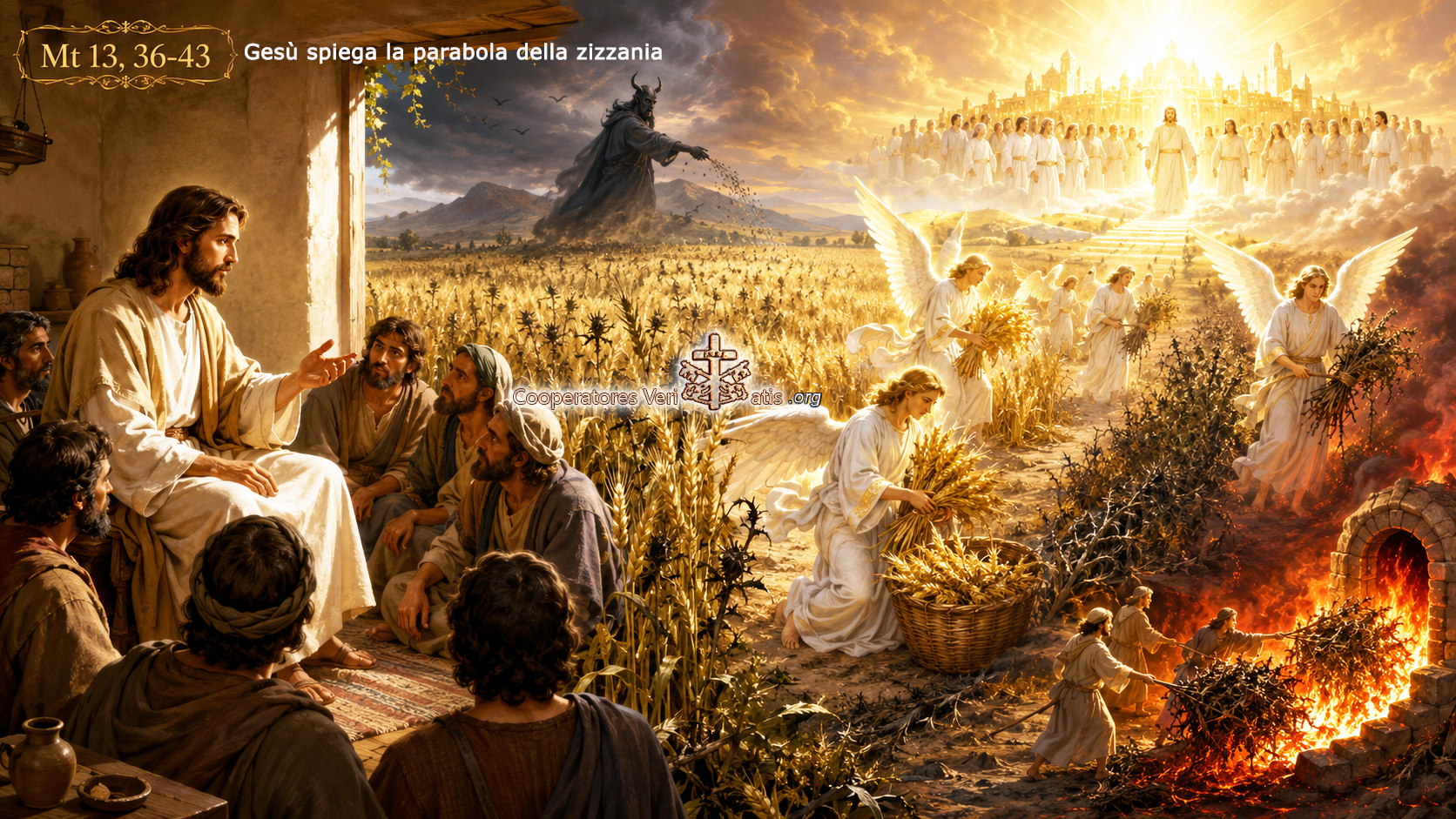
How has all this happened? We will confide to you our thought: there has been a power, an adverse power. Let us say its name: the Devil. This mysterious being who appears in Saint Peter’s very letter—which we are commenting on—and who is alluded to so many times in the Gospel—on the lips of Christ—returns the mention of this enemy of man. We believe in something preternatural that has come into the world precisely to disturb, to suffocate the fruits of the Ecumenical Council, and to hinder the Church from breaking forth into a hymn of jubilation for having once again full awareness of herself.
Precisely for this, we would like to be able, now more than ever, to exercise the function that God entrusted to Peter: to confirm the brethren in the faith. We would like to communicate to you this charism of certainty that the Lord gives to the one who represents Him, even unworthily, on this earth. And to tell you that faith—when founded on the word of God, accepted and placed in conformity with our own human spirit—gives us a truly firm certainty. Whoever believes with simplicity and humility knows he is on the right path, feels that he has an interior witness which confirms us in our difficult ideology and consoles us in the difficult conquest of truth.
The Lord manifests Himself as light and truth to the one who accepts Him in His word, and His word does not become an obstacle to truth and to the path toward being, but becomes a rung by which we may ascend and truly be conquerors of the Lord, who comes to meet us and gives Himself today through this methodology, this path of faith, which is a foretaste and guarantee of the final vision.
Strong in the Faith
And then We see the third aspect, which we so love to contemplate: the great expanse of believing Humanity. We see a great number of humble, simple, pure, upright, strong souls, who believe, who are—as Saint Peter says at the end of his epistle—“fortes in fide” (“strong in the faith”). 1 Peter 5:9 And we would like this strength of faith, this security, this peace, to triumph over the obstacles that life—our own experience and the phenomenology of things—places before us, and that we may always be strong in the faith.
Brothers, we are not saying strange, difficult, or absurd things. We would simply like you to make the experience of an act of faith, in humility and sincerity; a psychological effort that tells ourselves to try to make a conscious act. Is it true? Is it not true? Do I accept? Do I not accept? Yes, Lord, I believe in your word; I believe in your Revelation; I believe in the One whom You have given me as Witness and Guarantee of this Your Revelation, in order to feel and experience, with the strength of faith, the foretaste of the blessed life that has been promised to us through faith.
(Chat GPT translation from the official Spanish text below)
*N.B. This most famous homily of Pope Saint Paul VI apparently has no official English translation by the Vatican, to this day! It was duly published in the original Italian and in the official Spanish translation (below) by the Vatican newspaper L'osservatore Romano in the weekly edition of 30 of June - 1 of July 1972. What is more, the Vatican website today does not provide this homily in any language! Nor does it appear in the official documents of the Vatican Acta Apostolica Sedes (AAS). This homily is listed in its chronological list of Paul VI's homilies, but what is give is a cheap summary of this masterful discourse! The Enemy has many earthly agents who censor the truth to try to remain unexposed.
__
Homilía «Ser fuertes en la fe» – San Pablo VIMisa del 29 de junio de 1972, conmemorativa del noveno aniversario de su coronación como Papa el 30 de junio de 1963, tras ser elegido el 21 de junio de 1963.
L’Osservatore Romano, 30 de junio – 1 de julio de 1972.
(Edición española, 9 de julio de 1972, pp. 1–2)
Tenemos que agradecer a vosotros y a cuantos, ausentes de Roma, estáis presentes en espíritu, la asistencia a este rito que quiere tener una doble intención. La primera —y es suficiente— es la de honrar a los santos Pedro y Pablo, especialmente por estar en la basílica en la que nos hallamos, sobre la tumba y las reliquias del apóstol Pedro; de honrar a estos príncipes de los apóstoles y de honrar a Cristo en ellos, y de sentirnos llevados por ellos a Cristo, pues les somos deudores de esta gran herencia de la fe. Y, además, la otra intención es que no podemos ser insensibles a conmemorar el noveno aniversario de nuestra elección —como sucesor de Pedro— al Pontificado romano y, lo decimos temblando, al puesto de representante visible en la Tierra, vicario de Nuestro Señor Jesucristo.
Os lo agradecemos de corazón, también, porque esta presencia nos asegura lo que más vivo y ardoroso está en nuestros deseos: vuestra adhesión, vuestra fidelidad, vuestra comunión, vuestra unidad en la oración y en la fe, y en la constitución de esta misteriosa sociedad visible y terrenal que se llama la Iglesia, y por sentirnos aquí particularmente Iglesia, unidos en Jesucristo como en un cuerpo solo; también porque confiamos en que esta presencia significa ayuda, oración, indulgencia para quien os habla y también oración por Nos, por nuestro cargo, por la misión que el Señor Nos encomendó para el bien de la Iglesia y del mundo. Y esta oración Nos servirá verdaderamente de gran sufragio para cumplir humilde y fuertemente nuestra fatiga.
Nos sentimos autorizados a ceder la palabra al propio san Pedro y a rogarle que diga una de sus palabras entre las tantas hermosas que nos dejó en las dos epístolas canónicas que conservamos en el cuerpo de la Sagrada Escritura, y elegimos las que hablan de vosotros. San Pedro habla de la comunidad, la Iglesia naciente, en la primera carta —extraña, pero expresiva— que envió desde Roma a las iglesias de Oriente, a las iglesias de Asia Menor, dicen los exégetas informados, y que, según su costumbre, escribió no para hacer nuevas comunicaciones doctrinales —como solía hacer san Pablo—, sino para exhortar. Se siente al pastor que quiere incitar, animar y dar conciencia de lo que el pueblo cristiano es y de lo que debe hacer. En esta primera carta de san Pedro se toca, con profunda clarividencia y agudeza, toda la gama de los nuevos sentimientos que deben tener vivencia y brotar con ímpetu del corazón cristiano. Entre las muchas palabras que la carta contiene, os presentamos estas que dejamos a vuestra meditación, con un breve comentario; dice san Pedro:
«Vosotros sois una estirpe elegida, un sacerdocio real, gente santa, pueblo de su propiedad, para que proclaméis las virtudes de quien os llamó de las tinieblas a la luz maravillosa. Vosotros, que antaño no erais un pueblo, ahora sois pueblo de Dios; vosotros, que antes no fuisteis partícipes de la misericordia, ahora en cambio participáis de la misericordia del Señor». 1 Pedro 2:9-10
He aquí lo que Nos sometemos un momento a vuestra reflexión.
Estas son palabras que han sido muy estudiadas en los últimos años, especialmente porque han sido el eje de la doctrina del Concilio en su capítulo principal, es decir, en la Constitución dogmática sobre la Iglesia, donde se describe precisamente este cuadro del pueblo de Dios.
Sí; os decimos que en este momento propio de oración, pobres como somos, el Señor nos inspira para comprender las cosas. Imaginamos tener delante de Nos, casi extendida en panorama, a toda la Santa Iglesia Católica, y la vemos —con las características que san Pedro indica— en una unidad; recogida en este principio —Cristo— para este fin: glorificarle; para este beneficio: salvarse; para esta transfiguración, casi para esta metamorfosis que está iniciada en cada uno de los que componen esta comunidad de orden sobrenatural, por el descubrimiento de la vocación en cada uno de los componentes de esta gran masa humana, de este gran mar de la Humanidad, en el que cada cual está personalmente llamado como miembro de la multitud, personalmente llamado —según dice el Apocalipsis acerca del último día— a recibir un nombre nuevo.
Si bien recuerdo, dice el Señor en el texto, que todos estamos llamados a ejercer, a componer, un sacerdocio real. Aquí hay una reminiscencia del Antiguo Testamento —la del Éxodo— cuando Dios, hablando a Moisés antes de entregarle la Ley, dice: «Yo haré de este pueblo un pueblo sacerdotal y real». San Pedro recoge esta palabra tan grande, tan exaltadora, y la aplica al nuevo pueblo de Dios, heredero y continuador del Israel de la Biblia, para formar un nuevo Israel, el Israel de Cristo. Dice san Pedro: «Será el pueblo sacerdotal y real el que glorificará al Dios de la misericordia, al Dios de la salvación».
Sabemos que esta palabra ha sido, a veces, mal entendida, como si el sacerdocio fuera un solo orden, es decir, fuese comunicado a cuantos están insertos en el Cuerpo Místico de Cristo, a cuantos son cristianos. En cierto sentido es verdad, y solemos llamarlo sacerdocio común, pero el Concilio nos dice —y la Tradición ya nos lo había enseñado— que existe otro grado, otro estado de sacerdocio: el sacerdocio ministerial, que tiene facultades y prerrogativas particulares y exclusivas, precisamente del sacerdocio ministerial.
Pero detengámonos en lo que interesa a todos: el sacerdocio real. Aquí deberíamos preguntarnos qué significa sacerdocio, pero las explicaciones no acabarían nunca, y por ello nos limitamos y conformamos con esto: sacerdote significa capacidad de rendir culto a Dios, de comunicar con Él, de buscarle siempre en una profundidad nueva, en un descubrimiento nuevo, en un amor nuevo. Este impulso de la Humanidad hacia Dios, que no ha sido suficientemente alcanzado ni suficientemente conocido, es el sacerdocio de quien está inserto en el único Sacerdote que, después del advenimiento del Nuevo Testamento, es Cristo. Es que el cristiano está dotado, por ello mismo, de esta calidad, de esta prerrogativa de poder hablar al Señor en términos verdaderos, como de hijo a padre.
Audemus dicere: podemos en verdad celebrar ante el Señor un rito, una liturgia de la oración común, una santificación de la vida incluso profana, que distingue al cristiano del que no es cristiano. Este pueblo es distinto, aunque esté confundido en la gran marea de la Humanidad. Tiene su distinción, su característica inconfundible. San Pablo se definió segregatus, separado, distinto del resto de la Humanidad, precisamente por estar investido de prerrogativas y funciones que no tienen los que no poseen la suma fortuna y la excelencia de ser miembros de Cristo.
Entonces tenemos que considerar que nosotros, los que estamos llamados a ser hijos de Dios, a participar en el Cuerpo Místico de Cristo, que somos animados por el Espíritu Santo y hechos templos de la presencia de Dios, tenemos que realizar este coloquio, este diálogo, esta conversación con Dios en la religión, en el culto litúrgico, en el culto privado, y tenemos que extender el sentido de la sacralidad incluso a las acciones profanas. «Si coméis, si bebéis —dijo san Pablo—, hacedlo por la gloria de Dios.» Y lo dice repetidas veces en sus cartas, como para reivindicar al cristiano la capacidad de infundir algo nuevo, de iluminar, de sacralizar también las cosas temporales, externas, efímeras, profanas.
Se nos exhorta a dar al pueblo cristiano, que se llama Iglesia, un sentido verdaderamente sagrado. Y afirmándolo así, sentirnos que tenemos que contener la ola de profanidad, desacralización, secularización, que sube, que oprime y que quiere confundir y desbordar el sentido religioso en el secreto del corazón —en la vida privada exclusivamente secreta, o también en las afirmaciones de la vida exterior— de toda interioridad personal, o incluso hacerlo desaparecer. Se afirma que ya no hay razón para distinguir un hombre de otro, que no hay nada que pueda realizar esta distinción. Aún más: hay que devolver al hombre su autenticidad, hay que devolver al hombre su verdadero ser, que es común a todos los demás.
Pero la Iglesia, y hoy san Pedro, llamando al pueblo cristiano a la conciencia de sí mismo, le dicen que es el pueblo elegido, distinto, adquirido por Cristo, un pueblo que debe ejercer una particular relación con Dios, un sacerdocio con Dios. Esta sacralización de la vida hoy no debe ser borrada, expulsada de las costumbres y de nuestra vida, como si ya no debiera figurar. Hemos perdido los hábitos religiosos, hemos perdido muchas otras manifestaciones exteriores de la vida religiosa. Respecto a esto hay mucho que discutir y mucho que conceder, pero es necesario mantener el concepto, y con el concepto también algún signo de la sacralidad del pueblo cristiano, es decir, de aquellos que están insertos en Cristo, Sumo y Eterno Sacerdote.
Ello nos dirá también que tenemos que sentir un gran fervor religioso. En la actualidad hay una parte de los estudios de la Humanidad —la llamada sociología— que prescinde de este contacto con Dios. Por el contrario, la sociología de san Pedro, la sociología de la Iglesia, al estudiar a los hombres, pone en evidencia precisamente este aspecto sacral, de conversación con el Inefable, con Dios, con el mundo divino, y ello hay que afirmarlo en el estudio de todas las diferenciaciones humanas.
Por muy heterogéneo que se presente el género humano, no tenemos que olvidar esta verdad fundamental que el Señor nos confiere cuando nos da la gracia: todos somos hermanos en el mismo Cristo. Ya no hay ni judío, ni griego, ni escita, ni bárbaro, ni hombre, ni mujer. Todos somos una sola cosa en Cristo, todos estamos santificados, todos tenemos la participación en este grado de elevación sobrenatural que Cristo nos confirió, y san Pedro nos lo recuerda; es la sociología de la Iglesia que no debemos hacer desaparecer ni olvidar.
Volviendo a mirar aquel panorama a que aludimos —el gran plano de la vida humana, toda la Iglesia—, ¿qué es lo que vemos? Si nos preguntan qué es hoy la Iglesia, ¿se puede confrontar tranquilamente con las palabras que Pedro nos dejó como herencia y meditación?, ¿podemos estar tranquilos? ¿No podemos ver a la Iglesia en una ideología que nos obliga a alguna reflexión, a alguna actitud, a algún esfuerzo y a alguna virtud que se convierte en característica del cristiano?
Pensamos de nuevo en este momento —con inmensa caridad— en todos nuestros hermanos que nos abandonan, en muchos que son fugitivos y olvidan, en muchos que tal vez nunca han conseguido tener conciencia de la vocación cristiana aunque han recibido el bautismo. Quisiéramos muy de verdad tender la mano hacia ellos y decirles que el corazón está siempre abierto, que pasar el umbral es fácil. Mucho quisiéramos hacerles partícipes de la grande e inefable fortuna de nuestra felicidad, la de estar en comunicación con Dios, que no nos quita nada de la visión temporal y del realismo positivo del mundo exterior. Tal vez ello nos obliga a renuncias, a sacrificios, pero mientras nos priva de algo, multiplica sus dones. Nos impone renuncias, pero nos proporciona abundantemente otras riquezas. No somos pobres, somos ricos, porque tenemos la riqueza del Señor.
Ahora bien, quisiéramos decir a estos hermanos —de los que sentimos el desgarro en las entrañas de nuestra alma sacerdotal— cuánto les tenemos presente, cuánto —ahora y siempre, y cada vez más— les queremos, y cuánto rezamos por ellos, y cuánto procuramos con este esfuerzo que les persigue y les rodea suplir la interrupción que ellos mismos hacen de nuestra comunión en Cristo.
Duda, incertidumbre, inquietud
Luego existe otra categoría, y a ella pertenecemos un poco todos. Y diría que esta categoría caracteriza a la Iglesia de hoy. Se diría que a través de alguna grieta ha entrado el humo de Satanás en el templo de Dios. Hay dudas, incertidumbre, problemática, inquietud, insatisfacción, confrontación. Ya no se confía en la Iglesia; se confía más en el primer profeta profano —que nos viene a hablar desde algún periódico o desde algún movimiento social— para seguirle y preguntarle si tiene la fórmula de la verdadera vida; y, por el contrario, no nos damos cuenta de que nosotros ya somos dueños y maestros de ella.
Ha entrado la duda en nuestras conciencias y ha entrado a través de ventanas que debían estar abiertas a la luz: la ciencia. Pero la ciencia está hecha para darnos verdades que no alejan de Dios, sino que nos lo hacen buscar aún más y celebrarle con mayor intensidad. Por el contrario, de la ciencia ha venido la crítica, ha venido la duda respecto a todo lo que existe y a todo lo que conocemos. Los científicos son aquellos que más pensativa y dolorosamente bajan la frente y acaban por enseñar: «no sé, no sabemos, no podemos saber». Es cierto que la ciencia nos dice los límites de nuestro saber, pero todo lo que nos proporciona de positivo debería ser certeza, debería ser impulso, debería ser riqueza, debería aumentar nuestra capacidad de oración y de himno al Señor; y, por el contrario, he aquí que la enseñanza se convierte en palestra de confusión, en pluralidad que ya no va de acuerdo, en contradicciones a veces absurdas.
Se ensalza el progreso para luego poder demolerlo con las revoluciones más extrañas y radicales, para negar todo lo que se ha conquistado, para volver a ser primitivos después de haber exaltado tanto los progresos del mundo moderno.
También en nosotros, los de la Iglesia, reina este estado de incertidumbre. Se creía que después del Concilio vendría un día de sol para la historia de la Iglesia. Por el contrario, ha venido un día de nubes, de tempestad, de oscuridad, de búsqueda, de incertidumbre, y se siente fatiga en dar la alegría de la fe. Predicamos el ecumenismo y nos alejamos cada vez más de los otros. Procuramos excavar abismos en vez de colmarlos.
¿Cómo ha ocurrido todo esto? Nos os confiaremos nuestro pensamiento: ha habido un poder, un poder adverso. Digamos su nombre: el Demonio. Este misterioso ser que está en la propia carta de san Pedro —que estamos comentando— y al que se hace alusión tantas y cuantas veces en el Evangelio —en los labios de Cristo— vuelve la mención de este enemigo del hombre. Creemos en algo preternatural venido al mundo precisamente para perturbar, para sofocar los frutos del Concilio Ecuménico y para impedir que la Iglesia prorrumpiera en el himno de júbilo por tener de nuevo plena conciencia de sí misma.
Precisamente por esto, quisiéramos ser capaces, ahora más que nunca, de ejercer la función que Dios encomendó a Pedro de confirmar en la fe a los hermanos. Quisiéramos comunicarnos este carisma de la certeza que el Señor da a quien le representa, incluso indignamente, en esta tierra. Y deciros que la fe —cuando está fundada en la palabra de Dios, aceptada y situada en la conformidad de nuestro propio ánimo humano— nos da una certeza verdaderamente segura. Quien crea con sencillez, con humildad, se sabe por el buen camino, siente que tiene un testimonio interior que nos confirma en nuestra difícil ideología y nos conforta en la difícil conquista de la verdad.
El Señor se manifiesta como luz y verdad al que lo acepta en su palabra, y su palabra no se convierte en obstáculo a la verdad y al camino hacia el ser, sino en peldaño por el que podemos subir y ser de verdad conquistadores del Señor, que nos viene al encuentro y se entrega hoy a través de esta metodología, de este camino de la fe que es anticipo y garantía de la visión definitiva.
Y entonces Nos vemos el tercer aspecto, que nos gusta tanto contemplar, la gran extensión de la Humanidad creyente. Vemos una gran cantidad de almas humildes, simples, puras, rectas, fuertes, que creen, que son —según dice san Pedro al final de su epístola— «fortes in fide». 1 Pedro 5:9 Y quisiéramos que esta fuerza de la fe, esta seguridad, esta paz, triunfase sobre los obstáculos que la vida —nuestra propia experiencia y la fenomenología de las cosas— ponen delante de nosotros, y que fuéramos siempre fuertes en la fe.
Hermanos, no decimos cosas extrañas, difíciles ni absurdas. Quisiéramos tan solo que hicierais la experiencia de un acto de fe, en humildad y sinceridad; un esfuerzo psicológico que nos diga a nosotros mismos que tratemos de cumplir una acción consciente. ¿Es cierto?, ¿no es cierto? ¿Acepto?, ¿no acepto? Sí, Señor, yo creo en tu palabra; creo en tu Revelación; creo en quien Tú me has dado como testigo y garantía de esta Revelación Tuya, para sentir y probar, con la fuerza de la fe, el anticipo de la bienaventuranza de la vida que con la fe se nos ha prometido.