"To understand [the long history of Europe] one cannot omit...
Saint Benedict, whom Saint Paul VI proclaimed patron saint of Europe in 1964, calling him "messenger of peace, architect of unity, teacher of civilization." Aid to the poor, the sick, and the elderly; the education of children and universities; hospitals and medicine; architecture and engineering; the development of science; law and the organization of cities and states themselves: so many areas in Europe have been profoundly influenced by Saint Benedict and his monks! Without this monastic heritage, European civilization, as we know it, would not exist. Here in Metz, thanks to the work of
Saint Chrodegang, among others, a Benedictine spirit of fraternity, communion, and shared life was palpable. From here, Gregorian chant spread throughout the Carolingian territories, bringing harmony and beauty to the entire continent. One cannot speak of Europe without mentioning Christianity."
Pope Leo XIV's visit to France: A relief after the storm
1 October 2026,
EL WANDERER (English translation by Google, original Spanish follows.)
Last week, Pope Leo XIV visited France. It was his second significant trip to European countries, and, as with his visit to Spain, I believe it was a great success. I
said it then, and I repeat it now with even greater conviction: I believe we are witnessing a return to the style of John Paul II, with all the pros and cons that entails. And, consequently, the definitive overcoming of the Franciscan style. I know that this last point is a hotly debated topic within conservative and traditionalist circles, and I will delve into it in two articles that I will publish next week. I am not interested in addressing it here, nor in the comments section; we will do so in due course. But I am interested in honestly analyzing the papal trip to France. And I emphasize that my opinions are based on what was said during this trip, and not on his decisions or speeches delivered in Rome, or on other occasions. In other words, I am not making a sweeping judgment on the nascent pontificate of Leo XIV, but rather on a very small portion of it: his apostolic journey to France.
The first thing that struck me was the reaction of the secular and anti-Christian press. It ranged from astonishment to silence. The blog Messa in Latino recently published a
brief review of these articles, which is worth revisiting. Progressive journalism, which is practically the entire press, couldn't deny the enthusiasm it generated, although it was clear in its assessment. This is an unmistakable sign that it took them by surprise. While the usually loquacious Elisabetta Piqué remained completely silent, María Laura Avignolo, Clarín 's correspondent in France,
stated that "Rarely has a pontiff been so radical in his call to the spiritual imperative of conversion." She then added that in Leo XIV's words appeared: "A spirituality that the Catholic Church has always professed, but about which it has spoken much less since the Second Vatican Council . "
In France, Bernadette Sauvaget, a journalist for Libération —the newspaper founded by Sartre, a historic emblem of the French left—specializing in religion, was invited to French television to comment on the vigil for Leo XIV before 80,000 young people at the Stade de France. There, visibly uncomfortable, she said that she was terrified to see the Catholic resurgence among young French people . Not only had they not expected the massive influx of the faithful to the papal celebrations, and especially not young people rather than nostalgic old folks, but they also hadn't expected the clarity and forcefulness of the papal message. They believed that, with Francis, the reaffirmation of the Catholic faith had been definitively buried. And that has not been the case.
I decided to read all of the Pope's addresses in France, a task that took me an entire morning but was edifying. Not since I read Pope Benedict XVI's Spe salvi , well over a decade ago, had I been so edified by papal texts. I can say that, during his trip to France, Pope Leo confirmed us in the faith, which is his specific task. How else can
these words , for example, be described ?
Yes, God is the Lord of history and, whatever happens, He leads it towards salvation: in Christ all evil has an end, precisely because the end becomes the beginning of a new and eternal life.
Or
these others :
Yes, eternal life is a firm and sure promise that the Lord makes to us. He has already obtained it for us through his death on the cross and his resurrection, and he makes it a reality in us every day through the grace of baptism.
One of the most striking aspects is the centrality of Jesus Christ, which appears in all his words. The Lord is always at the heart of his sermons and speeches delivered in religious settings. We must remember that we come from times when the Argentine pontiff wallowed in the mire of cheap sociologism and preferred, for example, not to give the apostolic blessing so as not to offend non-Christians. The difference is enormous.
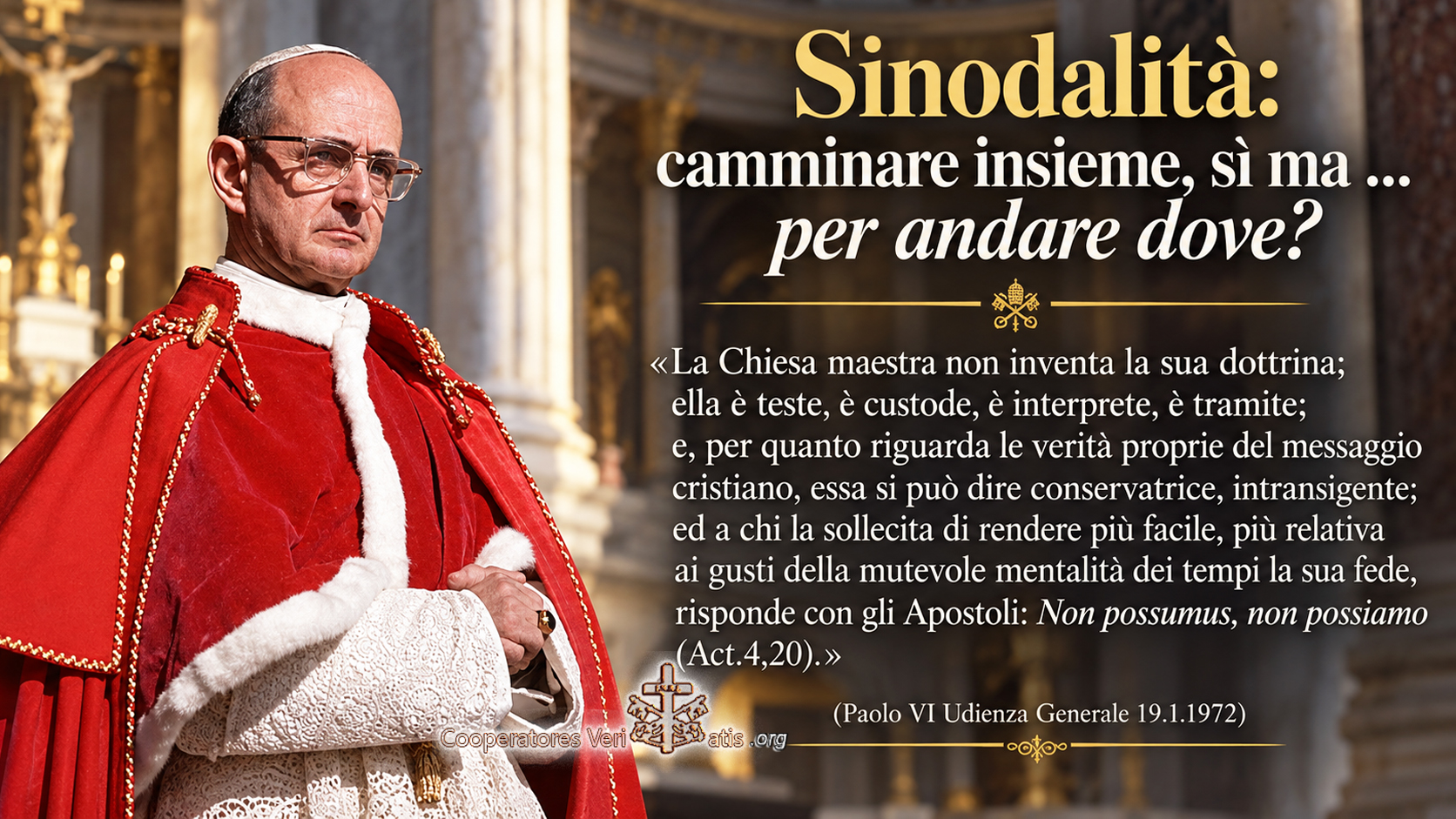
And another point in that same vein: only once in all his speeches, and then only in a very minor way, did he mention the famous synodality. He did so when he addressed the French bishops in Lourdes. Just once! Not even when he met in Paris with the “synodal assembly” of that diocese did he refer to the topic. Let us remember that until a few months ago, “synodality” was the magic word that had to appear in every speech by nuns, priests, and bishops. My impression, which I've had since the first months of his pontificate, is that Leo will slowly cool down the issue, and the synod on synodality will end up dying of starvation. We shall see.
But it's pointless to dwell on comparing the differences with the previous pontificate. They are obvious, and what is obvious needs no proof. Let's focus on other positive and striking aspects. One of them is the recurring theme in almost all of Pope Leo's addresses of the remembrance of the saints of France, who are legion. And he is not referring to contemporary and ecumenical saints of dubious quality, but to the most venerable saints of the Firstborn Daughter of the Church, those who "worship the true God." He said in his
homily in the Place de la Concorde:
The living water of the Holy Spirit has been poured out in abundance and continues to bear fruit in the Church through missionaries and witnesses present in every culture and among every people. This water makes fruitful all that it touches and transforms to produce its fruit, namely, the holiness of those who worship the true God and serve their brothers and sisters with charity and generosity. In this beautiful country of France, many have been nourished by this living water throughout the centuries and have consecrated their lives entirely to good: the early martyrs such as Blandina, Pothinus, and Irenaeus; the holy founders of religious orders; the holy bishops such as Martin of Tours and Francis de Sales; the men and women with hearts sensitive to the needs of their fellow human beings, such as Vincent de Paul, Frédéric Ozanam, Jeanne Jugan, and many others.
He reminded the young people
: Look to the example of the saints: even in the face of persecution, these brothers and sisters of ours paved the way for peace. Look to those priests passionate for Christ, like Saint Eugene de Mazenod and Saint John Vianney; contemplate the mystical beauty of Saint Thérèse of Lisieux; Blessed Pauline Jaricot, fervent in charity and mission; the courage of the fifty martyrs of the apostolate during the Second World War, who served their brothers and sisters to the point of sacrificing their lives. The saints changed the course of history , leading many from suffering to hope, because they first changed their own hearts, transforming them in the light of faith.
And later, in the same speech to young people:
Furthermore, we have the saints as allies: they are friends who sustain us in trials. Dear friends, when life's decisions demand courage, turn to their intercession and imitate their example : as we have sung in the litanies, the encouragement of the saints assures us that we are never alone in prayer, never alone in the Church.
Not only that, but he proposed Saint Joan of Arc as an example of a strong woman (I don't know if Benedict XVI would have gone that far):
In this regard, the apostle gives us a third verb: to fight. Indeed, fleeing from evil and striving for good implies fighting. Yes, fighting as Saint Paul did, often depicted with a sword in his hands , a symbol of the Word of God, “the sword of the Spirit” (Eph 6:17). This verb resonates powerfully here in France, the land of Saint Joan of Arc, a young woman who knew how to fight with audacity .
Another very positive point is that he mentioned on several occasions the importance of the liturgy in the Christian life and in the conversion of catechumens, whose numbers have increased exponentially in recent years.
He told the priests and consecrated persons:
To you who celebrate the Eucharist daily, I ask that you ensure that liturgical celebrations are always lived with dignity and decorum, even where smaller communities gather. Be conscious heirs of the Fathers and Saints of the Church who, throughout the centuries, have handed down to us the profound meaning and beauty of the liturgy, always bearing witness to great humility before the Mystery being celebrated. The Second Vatican Council, whose richness owes much to France, gathered and deepened this heritage in an eminent way, recognizing its central place in the life of the Church (cf. Sacrosanctum Concilium, 10). I therefore exhort all of you—bishops, priests, deacons, and consecrated persons—to cultivate a genuine love for the liturgy and to be witnesses and servants of the prophetic, priestly, and royal vocation of all the People of God.
And on
another occasion :
The liturgy, in fact, cannot be considered something "subsequent" to catechesis, as if it merely put into practice what was learned during the journey. The liturgy manifests and actualizes the mystery of Christ's Paschal Mystery and, therefore, is the event capable of revealing the meaning of the Good News and communicating the very life of God . With its rhythms, its language, and its rites, it forms an integral part of the journey of conversion and preparation for the sacraments.
It wasn't these issues, which we Catholics know are the most important, that astonished progressivism, but rather those related to the temporal order, or better said, the crystal-clear way in which he addressed them, in a France that prides itself on its secularism. The Jesuit Spadaro must have been dumbfounded listening to the papal speeches because, according to his calculations, Leo XIV would only refer to these matters in Lourdes, before a small, focused audience. And he was referring to issues like abortion, euthanasia, and religious education. But that didn't happen. He addressed them in Lourdes, but he also addressed them to Macron at the Élysée Palace and to European leaders in Metz.
He stated the following:
But no human law should make us lose sight of the certainty of human dignity. On the contrary, precisely in the name of this inalienable dignity of the human person, the temptation to take life under the pretext of false compassion must be firmly rejected. It is impossible to consider ending a life normal. What is legal is not necessarily moral. No one has the right, ever, based on laboratory algorithms, to decide on the life of a particular embryo or a particular elderly person! Medicine can never become the servant of programmed death!
He expressed himself in similar terms on another occasion. Regarding religious education,
he told the bishops:
I urge you to remain vigilant in defending the freedom and rights of the Church to evangelize, to educate in true freedom, and to publicly practice worship, so that charity may be visibly exercised in the name of Jesus Christ. However, Catholic education cannot, in any way, renounce its educational project, a Christ-centered project that aims at the integral development of the human person in all its dimensions: spiritual, cultural, intellectual, moral, and social. Therefore, no one should be surprised that any Catholic school offers opportunities to encounter Jesus Christ and hear his Word. And even less should any student be marginalized in their class simply for believing in Jesus.
Regarding these thorny issues, which he did not avoid but rather confronted clearly, he responded at the
press conference he gave to journalists on his return trip, who objected that he had gotten involved in politics:
There may be politicians, let's say, on the left or the right, who maintain that religion should be confined solely to the private sphere; let people do what they want on their own, but as a state we must stay out of it. Actually, when I went to France, I did so primarily to preach the Gospel, to announce the Good News, to reaffirm what Jesus Christ himself says when he affirms: “I am the way, the truth, and the life,” that is, to proclaim the truth that Jesus offers us. The defense of life is a subject that, as you all know, the Church teaches and in which it deeply believes. And so, on the one hand, I knew, obviously, that a law [on euthanasia] had recently been passed in France, while in other European countries and in other parts of the world issues related to end-of-life care were being debated. […] Therefore, I would say that, if this is politics, I have done it, but not to interfere in French politics. I did it to teach what the Church truly believes in.
In Metz, meeting with cultural figures and European leaders, Pope Leo
stated :
To understand this long history, however, one cannot omit another father of Europe: Saint Benedict, whom Saint Paul VI proclaimed patron saint of Europe in 1964, calling him "messenger of peace, architect of unity, teacher of civilization." Aid to the poor, the sick, and the elderly; the education of children and universities; hospitals and medicine; architecture and engineering; the development of science; law and the organization of cities and states themselves: so many areas in Europe have been profoundly influenced by Saint Benedict and his monks! Without this monastic heritage, European civilization, as we know it, would not exist. Here in Metz, thanks to the work of Saint Chrodegang, among others, a Benedictine spirit of fraternity, communion, and shared life was palpable. From here, Gregorian chant spread throughout the Carolingian territories, bringing harmony and beauty to the entire continent. One cannot speak of Europe without mentioning Christianity .
And in that same context, he also said:
To young people I say: have the courage to live responsibly the mission of building peace—in your hearts, in your relationships, in your families, in schools and universities, in the life of your cities, your towns, and throughout Europe. Do not be afraid to start a family, to have children, to defend the dignity of every person, from the first moment in the mother's womb until their last breath.
Advertisement
Finally, it was predictable that the Roman pontiff would refer to the painful wound that the episcopal consecrations of Écone inflicted on the Church, since it is in France where this movement is strongest. And he did so, as an exhortation, on two occasions. In a
homily Therefore, put communion with the Successor of Peter and with the Church before your personal sensibilities, in order to cultivate the unity of the people of God.
And in the
speech to the bishops:
This unity is not mere uniformity, but rather allows all authentically Catholic sensibilities to converge naturally in a common profession of faith, through obedience to legitimate pastors and, in particular, to the Successor of Peter , “the perpetual and visible principle and foundation of the unity of faith and communion” (LG, 18). It is a dynamic unity nourished by the Tradition of the Church—from the Fathers to the Second Vatican Council—and by the post-conciliar Magisterium.
As I said, I read all the addresses given by the Holy Father during his trip to France. Naturally, they also contain some trivial things and a few others—very few—that I didn't particularly like. But that's normal and to be expected. What I don't find normal or fair, though it is predictable, is that some maximalists or insatiable critics have begun to warn, in a condescending and admonitory tone: "Don't be fooled by Latin and solemnity!" And they pointed to a single passage from his first day of the trip, in which he speaks of the "ideals" of the French Revolution, as the reason for this warning. There is no integrity or honesty there: they disregard all the Pope's speeches to attack him for a single paragraph, a text which, moreover, they seek to interpret in the most twisted way possible.
The Holy Father
said :France has contributed genuine achievements to the world, including the recognition of the “Human Rights” inherent in the nature of the human person, particularly the right to religious freedom. This unwavering commitment to the inherent dignity of every human being is reflected in its national motto. Liberty, equality, and fraternity are not merely words inscribed on the pediments of its public buildings, but rather refer to universal ethical imperatives that also find in the Gospel message an inexhaustible source of inspiration and fulfillment.
The gravity of these statements, according to them, lies in the fact that the revolutionary motto is being based on the Gospel. But they don't read the whole sentence. The Pope doesn't say that liberty, equality, and fraternity are founded on the Gospel, as if the Sermon on the Mount were a draft of the 1789 Declaration. Rather, he says that these ethical principles also find in the Gospel message "an inexhaustible source of inspiration and fulfillment," and he anchors rights in the nature of the human person, not in the general will or Rousseau's social contract. The direction of the argument is exactly the reverse of what the maximalists criticize, since it doesn't go from the Revolution to the Gospel, but from the Gospel to words that, uprooted from their origins, wander orphaned across the facades of France. It is the old logic of grace that doesn't destroy nature but perfects it, and that also perfects, when it can, the language of humankind.
None of this is new. Saint Paul, at the Areopagus, did not begin his preaching by denouncing the idolatry of the Athenians and destroying altars, although his spirit boiled at the sight of the city full of idols; instead, he took the inscription from one of those pagan altars, Agnṓstōi theṓi , “to the unknown god,” and said to them: “What you worship without knowing, this I proclaim to you.” And to further scandalize the insatiable of that time, he quoted a Gentile poet, Aratus of Soli: “For we are also of his lineage.” Saint Justin saw in the wisdom of the Greeks scattered seeds of the Logos; Saint Augustine ordered the Egyptians to be stripped of their gold to put it at the service of Christ; And St. Gregory the Great wrote to Abbot Melito that he should not demolish the Anglo-Saxon temples, but rather purify them with holy water and consecrate them to the true God, so that the people, going to the customary places, might learn to worship the One they did not know. The Church never believed that evangelization required beginning by burning the vocabulary of the person being addressed, but always preferred to baptize them.
And all the more so when the vocabulary is, strictly speaking, stolen . Because the revolutionary triad didn't spring from nothing: there is no fraternity without a common Father, the equality of men was proclaimed by Saint Paul to the Galatians long before the National Assembly, and freedom is that for which Christ set us free. Chesterton saw it with his usual acuity: the modern world is full of old Christian virtues that have gone mad because they were separated from one another and wander about alone. Restoring their sanity is not surrendering to the Revolution, but rather reclaiming what was always ours. And anyone who thinks that a Pope cannot pronounce those words without blessing the guillotine should explain why Saint Paul could quote Aratus without incensing Zeus.
And I'll end with a question and a prophecy . What will Leo XIV's visit to Argentina be like? The French—it has to be said—far surpassed the Spanish. Everything was of higher quality in Gaul, from the liturgies to the famous vigil with the youth. But I think our Spanish brothers should rest easy: the Argentinians, this time unlike in football, will easily beat them in tackiness, vulgarity, and bad taste. That's what I fear based on some of the information that's coming in. At the vigil with the youth, for example, Abel Pinto will be singing! Luckily, the suggestion of one of the priests in charge of the organization, Father Fabrizio Maranzana (look him up and you'll know who he is), wasn't followed. He proposed that the host of the event be the model and wife of countless husbands and lovers, Pampita Ardohain. Will Flor de la V. or Lizi Tagliani replace her?
And my prophecy : The Holy Father will speak a few truths that the government will not like at all, and that's to be expected. But he will also speak a few truths that the bishops, widowed by Francis, will not like at all, bishops who, like zombies, continue to wander about, damaging and terrorizing Argentine soil.
__
La visita del papa León XIV a Francia. Un alivio después de la tempestad
1 de octubre de 2026 por
elwandererLa semana pasada el Papa León XIV visitó Francia. Fue su segundo viaje relevante a países europeos y, tal como ocurrió en España, creo que fue un gran éxito. Lo
dije en ese momento y lo repito ahora con más convicción: creo que estamos frente a un retorno del juanpablismo, con los pro y los contra que eso supone. Y, consecuentemente, la superación definitiva del francisquismo. Sé que esto último es un tema muy discutido en el ámbito conservador y tradicionalista, y lo profundizaré en dos artículos que publicaré la semana próxima. No me interesa tratarlo aquí ni tampoco en los comentarios: lo haremos en su momento. Pero sí me interesa analizar con honestidad el viaje papal a tierras galas. Y destaco que mis opiniones son sobre lo dicho en este viaje, y no sobre sus decisiones o discursos pronunciados en Roma, o en otras ocasiones. Es decir, no estoy emitiendo un juicio en bloque sobre el incipiente pontificado de León XIV sino sobre una porción muy reducida de él: su viaje apostólico a Francia.
Lo primero que me ha llamado mucho la atención ha sido la reacción de la prensa laica y anticristiana. Se ha movido entre la estupefacción al silencio. El blog Messa in Latino publicó hace pocos días una
breve reseña de esos artículos que es interesante revisar. El periodismo progresista, que es la casi totalidad, no ha podido negar el entusiasmo provocado aunque ha sido claro en su apreciación. Signo inequívoco de que los ha tomado por sorpresa. Mientras la locuaz Elisabetta Piqué se llamó a un absoluto silencio, María Laura Avignolo, corresponsal de Clarín en Francia,
afirmo que “Pocas veces un pontífice ha sido tan radical en su llamado al imperativo espiritual de la conversión”. Y luego agregó que en las palabras de León XIV aparecía: “Una espiritualidad que la Iglesia Católica siempre ha profesado. Pero de la que ha hablado mucho menos desde el Concilio Vaticano II”.
En Francia, Bernadette Sauvaget, periodista de Libération —el diario que fundó Sartre, insignia histórica de la izquierda francesa— especializada en religión, fue invitada a la television francesa para comentar la vigilia de León XIV ante 80.000 jóvenes en el Stade de France. Y allí dijo, visiblemente incómoda, que le causaba pavor ver el resurgimiento católico de los jóvenes franceses. No solamente no esperaban la afluencia masiva de fieles a las celebraciones pontificias, y sobre todo jóvenes y no ancianos nostálgicos, sino que no esperaban la claridad y contundencia del mensaje pontificio. Creían que, con Francisco, la reivindicación de la fe católica había quedado ya definitivamente sepultada. Y no ha sido así.
Decidí leer todas las alocuciones del Papa en Francia, tarea que me llevó una mañana entera pero fue edificante. Desde que leí hace mucho más de una década Spe salvi, del Papa Benedicto XVI, no había sido edificado de ese modo por los textos papales. Puedo decir que, durante su viaje a Francia, el Papa León nos confirmó en la fe, que es su tarea específica. ¿De qué otro modo pueden calificarse, por ejemplo,
estas palabras?
Sí, Dios es el Señor de la historia y, pase lo que pase, la conduce hacia la salvación: en Cristo todo mal tiene un término, precisamente porque el final se convierte en el comienzo de una vida nueva y eterna.
Sí, la vida eterna es una promesa firme y segura que el Señor nos hace. Ya nos la ha alcanzado con su muerte en la cruz y su resurrección, y ya la hace realidad cada día en nosotros por la gracia del bautismo.
Uno de los aspectos que saltan rápidamente a la vista, es la centralidad de Jesucristo que aparecen en todas su palabras. El Señor aparece siempre como el núcleo de sus sermones y discursos pronunciados en ámbito religioso. Recordemos que venimos de épocas en los cuales el pontífice argentino vivía revolviendo el fango de un sociologismo barato y prefería, por ejemplo, no dar la bendición apostólica para no ofender a los no cristianos. La diferencia es abismal.
Y otro elemento en ese mismo sentido: solamente en una ocasión en todas sus alocuciones, y de un modo muy secundario, habló de la famosa sinodalidad. Lo hizo cuando se dirigió en Lourdes a los obispos franceses. ¡Sólo una vez! Ni siquiera cuando se reunió en París con la “asamblea sinodal” de esa diócesis hizo referencia al tema. Recordemos que hasta hace algunos meses, “sinodalidad” era la palabrita mágica que debía aparecer necesariamente en cualquier discurso de monjas, curas y obispos. Mi impresión, y la tengo desde los primeros meses de su pontificado, es que León enfriará lentamente la cuestión y el sínodo de la sinodalidad terminarán muriendo de inanición. Veremos.
Pero no vale detenernos a comparar las diferencias con el pontificado anterior. Son evidentes, y lo evidente no necesita ser demostrado. Concentrémonos en otras cuestiones positivas y llamativas. Una de ellas es la recurrencia en casi todas las intervenciones del Papa León al recuerdo de los santos de Francia, que son legión. Y no hace referencia a santos contemporáneos y ecuménicos de dudosa calidad, sino a los santos más rancios de la Hija Primogénita de la Iglesia, aquellos que “adoran al Dios verdadero”. Dijo en su
homilía en la Place de la Concorde:
El agua viva del Espíritu Santo se ha derramado en abundancia y sigue dando fruto en la Iglesia a través de los misioneros y los testigos presentes en todas las culturas y entre todos los pueblos. Esta agua fecunda cuanto se deja tocar y transformar por ella para producir su fruto, es decir, la santidad de quienes adoran al Dios verdadero y sirven a sus hermanos y hermanas con caridad y generosidad. En este hermoso país que es Francia, muchos se han saciado de esta agua viva a lo largo de los siglos y han consagrado totalmente su vida al bien: los primeros mártires como Blandina, Potino e Ireneo; los santos fundadores y fundadoras de órdenes religiosas, los santos obispos como Martín de Tours y Francisco de Sales; los hombres y mujeres con un corazón sensible a las necesidades de sus semejantes, como Vicente de Paúl, Federico Ozanam, Juana Jugan y muchos otros.
A los jóvenes les
recordó: Miren el ejemplo de los santos: incluso en la persecución, estos hermanos y hermanas nuestros abrieron caminos de paz. Miren a aquellos sacerdotes apasionados por Cristo, como san Eugenio de Mazenod y san Juan María Vianney; contemplen la belleza mística de santa Teresa de Lisieux; a la beata Pauline Jaricot, ferviente en la caridad y la misión; el valor de los cincuenta mártires del apostolado, en tiempos de la Segunda Guerra Mundial, que sirvieron a sus hermanos y hermanas hasta el punto de sacrificar sus vidas. Los santos cambiaron el curso de la historia, haciendo que muchos pasaran del sufrimiento a la esperanza, porque primero cambiaron sus propios corazones, transformándolos a la luz de la fe.
Y más adelante, en el mismo discurso a los jóvenes:
Además, contamos con los santos como aliados: son amigos que nos sostienen en las pruebas. Queridos amigos, cuando las decisiones de la vida exijan valentía, recurran a su intercesión e imiten su ejemplo: como hemos cantado en las letanías, el aliento de los santos nos asegura que nunca estamos solos en la oración, nunca estamos solos en la Iglesia.
No sólo eso, sino que les propuso como ejemplo de mujer luchadora a Santa Juana de Arco (no sé si Benedicto XVI se habría animado a tanto):
A este respecto, el apóstol nos entrega un tercer verbo: luchar. De hecho, huir del mal y tender al bien implica luchar. Sí, luchar como lo hizo san Pablo, representado a menudo con una espada en las manos, signo de la Palabra de Dios, «la espada del Espíritu» (Ef 6,17). Este verbo resuena con fuerza aquí en Francia, tierra de santa Juana de Arco, una joven que supo luchar con audacia.
Otra cuestión muy positiva es que mencionó en varias ocasiones la importancia de la liturgia en la vida cristiana y en la conversión de los catecúmeno , que han aumentado exponencialmente en los últimos años.
Dijo a los sacerdotes y consagrados:
A ustedes, que celebran diariamente la Eucaristía, les pido que velen para que las celebraciones litúrgicas se vivan siempre con dignidad y decoro, también allí donde se reúnen comunidades más pequeñas. Sean herederos conscientes de los Padres y de los Santos de la Iglesia que, a lo largo de los siglos, nos han transmitido el significado profundo y la belleza de la liturgia, dando siempre testimonio de una gran humildad ante el Misterio celebrado. El Concilio Vaticano II, cuya riqueza debe mucho a Francia, recogió y profundizó de manera eminente esta herencia, reconociendo su lugar central en la vida eclesial (cf. Sacrosanctum Concilium, 10). Les exhorto, por tanto, a todos ustedes, obispos, sacerdotes, diáconos y consagrados, a cultivar un amor auténtico por la liturgia y a ser testigos y servidores de la vocación profética, sacerdotal y real de todo el pueblo de Dios.
Y en
otra ocasión:
La liturgia, en efecto, no puede considerarse una realidad “posterior” a la catequesis, como si en ella se pusiera simplemente en práctica lo aprendido durante el itinerario. La liturgia manifiesta y actualiza el misterio de la Pascua de Cristo y, por ello, es el acontecimiento capaz de revelar el sentido de la Buena Nueva y de comunicar la vida misma de Dios. Con sus ritmos, sus lenguajes y sus ritos, forma parte integrante del propio camino de conversión y de preparación a los sacramentos.
No fueron estos temas, que a los católicos sabemos que son los más importantes, los que han producido la estupefacción del progresismo, sino los que tienen que ver con el orden temporal o, mejor dicho, con la claridad meridiana con la que se expresó sobre ellos, en una Francia que hace gala de su laicismo. El jesuita Spadaro habrá quedado patitieso cuando escuchaba los discursos pontificios porque en su cuenta de X había pronosticado que León XIV sólo haría referencia a esas cuestiones en Lourdes, frente a un público reducido y focalizado. Y se refería a cuestiones como las del aborto, eutanasia o educación religiosa. Y no fue así. Lo dijo en Lourdes, pero lo dijo también a Macron en el Eliseo y a los líderes europeos en Metz.
Afirmó al respecto:
Pero ninguna ley humana debe hacernos perder la certeza de su dignidad. Por el contrario, precisamente en nombre de esta dignidad inalienable de la persona humana debe rechazarse firmemente la tentación de quitar la vida con el pretexto de una falsa compasión. Es imposible considerar normal el hecho de poner fin a la vida. Lo que es legal no es necesariamente moral. ¡Ninguno tiene el derecho, nunca, basándose en algoritmos de laboratorio, de decidir sobre la vida de un embrión determinado o de una persona de la tercera edad determinada! ¡La medicina nunca podrá convertirse en sierva de la muerte programada!»
Y en términos similares se expresó en otra ocasión. Con respecto a la educación religiosa
dijo a los obispos:
Los invito a mantenerse vigilantes para defender la libertad y los derechos de la Iglesia a evangelizar, a educar en la verdadera libertad y a practicar públicamente el culto, para que, de manera visible, se pueda ejercer la caridad en nombre de Jesucristo. Sin embargo, la enseñanza católica no puede, en modo alguno, renunciar a su proyecto educativo, un proyecto centrado en Cristo que tiene como objetivo el desarrollo integral de la persona humana en todas sus dimensiones: espiritual, cultural, intelectual, moral y social. Por lo tanto, a nadie debe sorprenderle que en cualquier centro católico se ofrezcan oportunidades para encontrarse con Jesucristo y escuchar su Palabra. Y mucho menos, ningún alumno debería verse marginado en su clase, por el hecho de creer en Jesús.
Sobre estas cuestiones espinosas que no evitó sino que afrontó con claridad, respondió en la
conferencia de prensa que brindó a los periodistas en su viaje de regreso quienes le objetaron que se habría metido en política:
Puede que haya políticos, digamos, de izquierdas o de derechas, que sostengan que la religión debería limitarse únicamente a la esfera privada; dejemos que las personas hagan lo que quieran por su cuenta, pero como Estado debemos mantenernos al margen. En realidad, cuando fui a Francia, lo hice principalmente para predicar el Evangelio, para anunciar la Buena Nueva, para reafirmar lo que el propio Jesucristo dice cuando afirma: «Yo soy el camino, la verdad y la vida», es decir, para proclamar la verdad que Jesús nos ofrece. La defensa de la vida es un tema que, como todos sabéis, la Iglesia enseña y en el que cree profundamente. Y así, por un lado, sabía, obviamente, que en Francia se ha aprobado recientemente una ley [de eutanasia], mientras que en otros países europeos y en otras partes del mundo se están debatiendo cuestiones relacionadas con el final de la vida. […] Por lo tanto, diría que, si esto es política, la he hecho, pero no para entrometerme en la política francesa. Lo he hecho para enseñar aquello en lo que la Iglesia cree verdaderamente.
En Metz, reunidos con personalidades de la cultura y líderes europeos, el Papa León
afirmó:
Para entender esta larga historia, sin embargo, no se puede omitir a otro padre de Europa: san Benito, que san Pablo VI proclamó patrono de Europa en 1964, llamándolo «mensajero de paz, realizador de unión, maestro de civilización». La ayuda a los pobres, a los enfermos y a los ancianos; la educación de los niños y las universidades; los hospitales y la medicina; la arquitectura y la ingeniería; el desarrollo de las ciencias; el derecho y la organización de las ciudades y de los propios estados: ¡tantos ámbitos, en Europa, han sido profundamente influenciados por san Benito y sus monjes! Sin este acervo monástico, la civilización europea, tal como la conocemos, no existiría. Aquí, en Metz, gracias a la obra, entre otras, de san Crodegango, se respiraba un espíritu benedictino de fraternidad, comunión y vida compartida. Desde aquí, el canto gregoriano se difundió en los territorios carolingios, trayendo armonía y belleza a todo el continente. No se puede hablar de Europa sin mencionar el cristianismo.
Y en ese mismo ámbito, dijo también:
A los jóvenes les digo: tengan el valor de vivir de manera responsable la misión de construir la paz, en su corazón, en sus relaciones, en su familia, en las escuelas y universidades, en la vida de sus ciudades, de sus pueblos y de toda Europa. No tengan miedo de formar una familia, de tener hijos, de defender la dignidad de cada persona, desde el primer instante en el vientre de la madre hasta su último aliento.
Finalmente, era previsible que el pontífice romano se refiriera a la dolorosa herida que las consagraciones episcopales de Êcone causaron a la Iglesia, pues es en Francia donde ese movimiento es más fuerte. Y lo hizo, como exhortación, en dos oportunidades. En una
homilíaAntepongan, por tanto, la comunión con el Sucesor de Pedro y con la Iglesia a sus sensibilidades personales, para cultivar la unidad del pueblo de Dios.
Y en el
discurso a los obispos:
Esta unidad no es una simple uniformidad, sino que permite que toda sensibilidad auténticamente católica converja de forma natural en una profesión de fe común, mediante la obediencia a los pastores legítimos y, en particular, al Sucesor de Pedro, «principio y fundamento, perpetuo y visible, de la unidad de fe y de comunión» (LG, 18). Se trata de una unidad dinámica que se nutre de la Tradición de la Iglesia —desde los Padres hasta el Concilio Vaticano II— y del Magisterio posconciliar.
Como dije, leí todas las alocuciones pronunciadas por el Santo Padre en su viaje a Francia. En ellas, como es lógico, aparecen también cosas intrascendentes y algunas otras—pocas— que no me gustaron mucho. Pero eso es lo normal y lo previsible. Lo que no me parece normal ni justo, aunque sí predecible, es que algunos maximalistas o insaciables, hayan comenzado a alertar, con tono condescendiente y admonitorio: «¡No se dejen engañar por los latines y las solemnidades!». Y señalaron como razón de esa alerta un único pasaje dicho en su primer día de viaje, en el que habla de los “ideales” de la Revolución Francesa. Allí no hay rectitud de intención ni honestidad: obliteran todos los discursos del Papa para atacarlo por un sólo párrafo, texto que, por lo demás, buscan interpretar del modo más torcido posible.
Dijo el Santo Padre:
Francia aportó al mundo auténticos logros; entre ellos, el reconocimiento de los “Derechos Humanos” inscritos en la naturaleza de la persona humana, en particular el de la libertad religiosa. Esta atención permanente a la dignidad inherente a toda persona humana encuentra eco en su lema nacional. La libertad, la igualdad y la fraternidad no son simples palabras grabadas en los frontones de sus edificios públicos, sino que remiten a exigencias éticas universales que encuentran también en el mensaje evangélico una fuente inagotable de inspiración y plenitud.
La gravedad de estas expresiones vendría dada, según ellos, en que se estaría fundamentando el lema revolucionario en el Evangelio. Pero no leen toda la frase. El Papa no dice que la libertad, la igualdad y la fraternidad se funden en el Evangelio, como si el Sermón de la Montaña hubiese sido un borrador de la Declaración de 1789. Dice más bien, que esos principios éticos encuentran también en el mensaje evangélico “una fuente inagotable de inspiración y plenitud”, y ancla los derechos en la naturaleza de la persona humana, no en la voluntad general ni en el contrato de Rousseau. La dirección del argumento es exactamente la inversa de la que le reprochan los maximalistas, puesto que no va de la Revolución al Evangelio, sino del Evangelio hacia unas palabras que, arrancadas de su suelo, andan huérfanas por los frontispicios de Francia. Es la vieja lógica de la gracia que no destruye la naturaleza sino que la perfecciona, y que perfecciona también, cuando puede, el lenguaje de los hombres.
Nada de esto es nuevo. San Pablo, en el Areópago, no empezó su predicación denunciando la idolatría de los atenienses y rompiendo altares, aunque le hervía el espíritu al ver la ciudad llena de ídolos; tomó en cambio la inscripción de uno de esos altares paganos, Agnṓstōi theṓi, «al dios desconocido», y les dijo: “Lo que veneráis sin conocer, eso os anuncio”. Y para mayor escándalo de los insaciables de entonces, citó a un poeta gentil, Arato de Solos: “Porque somos también de su linaje”. San Justino vio en la sabiduría de los griegos semillas dispersas del Logos; san Agustín mandó despojar a los egipcios de su oro para ponerlo al servicio de Cristo; y san Gregorio Magno escribió al abad Melito que no derribara los templos de los anglos, sino que los purificara con agua bendita y los consagrara al verdadero Dios, de modo que el pueblo, acudiendo a los lugares acostumbrados, aprendiera a adorar a quien no conocía. La Iglesia nunca creyó que para evangelizar hubiera que empezar por quemar el vocabulario del interlocutor, sino que prefirió siempre bautizarlo.
Y con más razón cuando el vocabulario es, en rigor, robado. Porque la tríada revolucionaria no salió de la nada: no hay fraternidad sin un Padre común, la igualdad de los hombres la proclamó san Pablo a los gálatas mucho antes que la Asamblea Nacional, y la libertad es aquella para la cual Cristo nos liberó. Chesterton lo vio con su agudeza habitual: el mundo moderno está lleno de viejas virtudes cristianas que se han vuelto locas, porque fueron separadas unas de otras y andan vagando solas. Devolverles el juicio no es claudicar ante la Revolución, sino que es reclamar lo que siempre fue nuestro. Y quien piense que un Papa no puede pronunciar esas palabras sin bendecir la guillotina debería explicar por qué San Pablo pudo citar a Arato sin incensar a Zeus.
Y termino con un interrogante y una profecía. ¿Cómo será la visita de León XIV a la Argentina? Los franceses -fuerza es decirlo-, superaron con creces a los españoles. Todo fue en la Galia de mejor calidad, desde las liturgias hasta la famosa vigilia con los jóvenes. Pero creo que nuestros hermanos españoles se deben tranquilizar: los argentinos, esta vez y a diferencia del fútbol, les ganaremos ampliamente en cutrerismo, vulgaridad y mal gusto. Es lo que me temo por algunos datos que van llegando. En la vigilia con los jóvenes, por ejemplo, cantará ¡Abel Pinto! Por suerte no se siguió la sugerencia de uno de los sacerdotes encargados de la organización, el P. Fabrizio Maranzana (busquen y sabrán quién es), que propuso que la conductora del encuentro fuera la modelo y mujer de enésimos maridos y amantes, Pampita Ardohain. ¿La reemplazará Flor de la V. o Lizi Tagliani?
Y mi profecía. El Santo Padre dirá unas cuantas verdades que no gustarán nada al gobierno, y es lo que corresponde. Pero dirá también unas cuantas verdades que no gustarán nada a los obispos viudos de Francisco que, como zombies, siguen vagando dañando y aterrorizando el suelo argentino.