Thursday, July 30, 2026

The 18 Rules of Saint Ignatius for Thinking with the Church

26 JULY-DAY 5 NOVENA TO ST IGNATIUS OF LOYOLA -From the writings of St.  Ignatius of Loyola: We should praise all the laws of the Church, keeping  our minds ever ready to 


1st Rule Be ready and prompt to obey all that the hierarchical Church teaches.

2nd Rule Praise confession and the Eucharist.

3rd Rule Praise prayers and the Divine Office.

4th Rule Praise religious orders, virginity and continence more than marriage.

5th Rule
Praise religious vows (poverty chastity, obedience) over states of life that do not allow the perfection to which these vows lead such as being in business or married.

6th Rule Praise relics of saints, participate in pilgrimages, indulgences, candle-lighting in church.

7th Rule Praise fasting and penances.

8th Rule Praise ornaments and church buildings. Venerate them for what they represent.

9th Rule Praise all the precepts of the Church; come to their defence when they are attacked.

10th Rule Find good and praise in our superiors. Don’t speak against them publicly, even if warranted, so as to cause scandal. Speak in private to those with whom you find fault.

11th Rule Praise scholastic learning and positive theology. The scholastic authorities are modern and help our understanding of scripture and the Church.

12th Rule Be on guard against comparing those of us alive now as superior in knowledge and holiness to the blessed who have passed away.

13th Rule To be right in everything, we ought always to hold that the white that I see is black, if the hierarchical Church so decides. Our holy mother the Church is directed and governed by the same Spirit and our Lord who gave the ten commandments.

14th Rule Be very cautious of speaking of predestination.

15th Rule Do not teach people to believe that they are already saved or condemned and thus that there is no more they can do in terms of good works. This encourages laziness and negligence of responsibility.

16th Rule Be on guard not to talk too much of faith such that people will be lazy and slothful in works.

17th Rule Works and free will are not to be discarded in favour of insistence on the importance of faith and grace.

18th Rule We ought to praise God out of pure love, fear of His Divine Majesty. This helps us get out of mortal sin. Filial fear is as acceptable a way of loving God as is being at one with the Divine Love.

https://www.thinkingfaith.org/articles/st-ignatius-rules-thinking-church-spiritual-direction-synodal-church
__

THINKING WITH THE CHURCH, RULES FOR

Written by St. ignatius of loyola, the Rules for Thinking with the Church are proposed to the individual as one of various practical means to attain the overall purpose of the spiritual exercises. Since the rules were written for Catholics of the 16th century, their intrinsic nature and interpretation reflect somewhat the religious atmosphere of the time.

The Rules for Thinking with the Church are not a theological treatise. No effort is made to establish absolute principles. Certain biblical truths are presupposed, but the rules in themselves are nothing other than practical means for Catholics to remain faithful to the Church and defend themselves against the innovations of the reformers. Rules 1 to 9 are for all Catholics. Rules 10 to 18 are primarily for those who have charge of instructing the faithful.

In the light of their historical origin, a summary of the rules can be forthright and clear. Rule 1 reminds Catholics that the understanding of the divine law is given to them by the Church rather than through private and subjective interpretation of Scripture. Rules 2 and 3 encourage the faithful to receive the Sacraments of Penance and Holy Eucharist, to partake in liturgical and other services, including the Divine Office and other prayer at fixed times. Rules 4 and 5 reaffirm the excellence of the religious life with its vows of obedience, poverty, and chastity. Rules 6 to 8 encourage the faithful to the continued practice of traditional Catholic piety outwardly expressed by the veneration of saints, pilgrimages, indulgenced works, and external penance. Rule 9 concludes this first group with the exhortation to praise and understand the laws of the Church, to defend them, not criticize them.

In the second group rule 10 counsels teachers and preachers against dwelling on the shortcomings of those in authority. Public criticism in sermons fosters murmuring and scandal among the faithful. Rule 11 recommends positive theology, as well as the scholastic method in theology and the scholastic theologians. They are excellent means for understanding and defending the divine truths. That vanity among preachers and teachers may be avoided, rule 12 forbids all comparisons between the living and the saintly geniuses of the past. Rule 13 contains the famous hyperbole with which St. Ignatius stresses unconditional submission to the teaching of the Church. In case of conflict between the latter and one's own intellect, the defined teaching of the Church must prevail: "What seems to me white, I will believe to be black if the hierarchical Church so defines." Rule 14 recommends moderation in dealing with the nature of predestination, faith, and grace. Immoderate emphasis of these elements of salvation may lead the faithful to fatalism, neglect of good works, and underestimation of the power of man's free will (rules 15, 16, 17). Finally, granted that the supreme motive for a Christian life is the pure love of God, when this fails to be a motive Catholics should be moved to the observance of the law by the filial and even servile fear of God (rule 18). Although written in the 16th century, these rules have never lost their practical value for Catholics even to the present time.

Bibliography: j. de guibert, The Jesuits: Their Spiritual Doctrine and Practice, ed. g. e. ganss, tr. w. j. young (Chicago 1964). p. dudon, St. Ignatius of Loyola, tr. w. j. young (Milwaukee 1949). w. sierp, "Recte sentire in ecclesia," Zeitschrift für Aszese und Mystik 16 (1941) 31–36.

God Expelled from School

Wednesday, July 29, 2026

Fauci, Tried, Should be Condemned and Hanged by the Head Until Dead


The Chinese Flu was created by Fauci and he made millions on vaccines on which he had a monopoly and he enforced numerous ridiculous universal mandates against the fundamental rights and well-being of everyone in the nation, including the Church. He should be brought to justice, for the good of the entire world!

President Joe Biden issued a preemptive, unconditional pardon for Dr. Anthony Fauci on January 20, 2025, in his final hours in the Oval Office. The blanket pardon covered any federal offenses Fauci may have committed related to his service as Director of the NIAID and Chief Medical Advisor between January 1, 2014, and January 19, 2025.

The presidential pardon is a major point of political contention on Capitol Hill during this Senate hearing. Fauci invokes supposed Fifth Amendment rights more than 100 times to avoid answering questions from Sen. Rand Paul (R-Ky.) regarding his pandemic-era journals and other numerous illegal activities against the American people.

Tuesday, July 28, 2026

The Greatest Dead Letter of Vatican II: Latin in the Liturgy

 Second Vatican Council | History, Summary, Changes, Date, Documents, Controversy, & Significance | Britannica


 "...[T]hough the Second Vatican Council permitted the substitution of vernacular liturgies where pastoral reasons suggested their usefulness, it commanded that the Latin be preserved. The Catholic Faith is so intimately bound to the two thousand years of Latin prayers any attempt to live the Catholic life without them will result in its attrition and ultimate apostasy--which we have witnessed in the few years of the vernacular experiment." John Senior, The Restoration of Christian Culture, (originally published in 1983), IHS Press: Norfolk, 2008, pp. 60-61.

I am a Vatican II priest who entered college seminary in 1987, and, upon the encouragement of my priest mentors, studied and loved the Second Vatican Council documents. My generation of priests is partially responsible for the new translation of the Roman Missal in English and for Summorum pontificum. We received and promoted the explicit liturgical requirements and preferences of Sacrosanctum concilium in a "hermeneutic of continuity": e.g. Latin, Gregorian Chant, Polyphony, the Organ as the preferred instrument of the Liturgy, etc. Because of the "hermeneutic of rupture" prevalent in the liturgy throughout the Roman Catholic parishes I have slowly been side-lined into almost exclusive Traditional Latin Mass ministry, simply because I love and wear the cassock and love and promote the Vatican II liturgical patrimony. I am not against the Mass of Paul VI. That Mass and its fanatical promoters are against me! But because I love and proudly promote the liturgical and cultural tradition of the Church I am typically "cancelled" or, at least, set aside, by the "tolerant" leadership of the Church at every level. When will the Church hierarchy finally embrace the liturgical norms of Vatican Council II? Even Pope Leo XIV seems totally oblivious to the specifics thereof. When will the cathedrals of the Catholic world promote Mass in Latin with Gregorian Chant and Polyphony holding pride of place? Only when that happens will we have a Vatican II Church! Ironically, the Society of Pius X is more consistent with Vatican II than most of the bishops and pastors of the Roman Catholic world.

https://plinthos.blogspot.com/search?q=hermeneutic

Benedict XVI Masterful Address to the Roman Curia (on the two opposing hemeneutics of Vatican II)

The Proper Hermeneutic Must Agree With Perennial Truth

Tuesday, July 21, 2026

Death Comes for the Archbishop --Bishop Varden


Bishop Erik Varden gives the reasons for Seminary education today: intellectual joy and intellectual freedom is the purpose of education, the perfection of the intellect for the proper ordering of the man/missionary, to bring clarity into catastrophe.
 
"Don't worry about the diocese; establish order at home." 

Friday, July 17, 2026

The Vatican II Overhaul of the Breviary

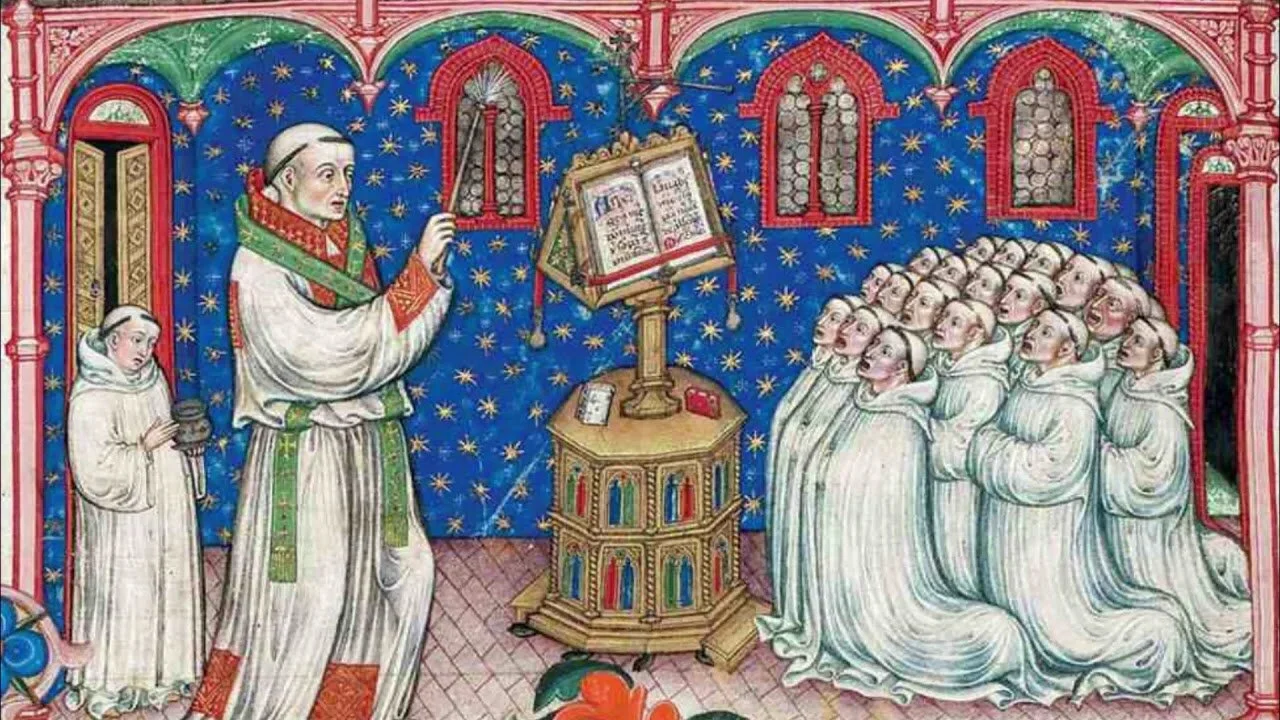
 Prière (Prayer) — Catholic Sacred Music


Having prayed the Liturgy of the Hours for the past forty years (bound to it as a cleric for the past thirty), and for the past fifteen years repeatedly experiencing the simplicity, profundity and incomparable splendor of the traditional (1962) breviary (especially when sung in choir), to which I have reverted, here is a brief assessment of the awful disaster of the the Vatican II Breviary.

Pope Saint John XXIII promulgated the Roman Breviary on July 25, 1960 with his Motu proprio  Rubricarum instructum, reinstating the venerable Psalter of Saint Jerome's Vulgate, only some fifteen years after the failed new Psalter of Pius XII (the Pian, or Bea Psalter). 

Below is the Vatican II overhaul of the breviary, which, though greatly altered, should still be sung in choir, preferably in Latin, recommended in all the parishes of the world, with the faithful! Because of that complete overhaul of the text, the singing of the Vatican II Divine Office is usually difficult and rare, and usually quite awful! The most beautiful thing in the world was deliberately made the most ugly.

There are people who are trying to make the new Office traditional and beautiful, and accessible to clerics and laity, but that is not at all easy to achieve. It is much easier to use the 1960 edition promulgated by John XXIII and approved by Summorum pontificum.

Cf. https://www.youtube.com/c/SingtheHours

Here is the SSPX Youtube livestream of parts of the Office at their Virginia Seminary.

__

Sacrosanctum concilium: CHAPTER IV: THE DIVINE OFFICE

83. Christ Jesus, high priest of the new and eternal covenant, taking human nature, introduced into this earthly exile that hymn which is sung throughout all ages in the halls of heaven. He joins the entire community of mankind to Himself, associating it with His own singing of this canticle of divine praise.

For he continues His priestly work through the agency of His Church, which is ceaselessly engaged in praising the Lord and interceding for the salvation of the whole world. She does this, not only by celebrating the eucharist, but also in other ways, especially by praying the divine office.

84. By tradition going back to early Christian times, the divine office is devised so that the whole course of the day and night is made holy by the praises of God. Therefore, when this wonderful song of praise is rightly performed by priests and others who are deputed for this purpose by the Church's ordinance, or by the faithful praying together with the priest in the approved form, then it is truly the voice of the bride addressed to her bridegroom; It is the very prayer which Christ Himself, together with His body, addresses to the Father.

85. Hence all who render this service are not only fulfilling a duty of the Church, but also are sharing in the greatest honor of Christ's spouse, for by offering these praises to God they are standing before God's throne in the name of the Church their Mother.

86. Priests who are engaged in the sacred pastoral ministry will offer the praises of the hours with greater fervor the more vividly they realize that they must heed St. Paul's exhortation: "Pray without ceasing" (1 Thess. 5:11). For the work in which they labor will effect nothing and bring forth no fruit except by the power of the Lord who said: "Without me you can do nothing" (John 15: 5). That is why the apostles, instituting deacons, said: "We will devote ourselves to prayer and to the ministry of the word" (Acts 6:4).

81. In order that the divine office may be better and more perfectly prayed in existing circumstances, whether by priests or by other members of the Church, the sacred Council, carrying further the restoration already so happily begun by the Apostolic See, has seen fit to decree as follows concerning the office of the Roman rite.

88. Because the purpose of the office is to sanctify the day, the traditional sequence of the hours is to be restored so that once again they may be genuinely related to the time of the day when they are prayed, as far as this may be possible. Moreover, it will be necessary to take into account the modern conditions in which daily life has to be lived, especially by those who are called to labor in apostolic works.

89. Therefore, when the office is revised, these norms are to be observed:

a) By the venerable tradition of the universal Church, Lauds as morning prayer and Vespers as evening prayer are the two hinges on which the daily office turns; hence they are to be considered as the chief hours and are to be celebrated as such.

b) Compline is to be drawn up so that it will be a suitable prayer for the end of the day.

c) The hour known as Matins, although it should retain the character of nocturnal praise when celebrated in choir, shall be adapted so that it may be recited at any hour of the day; it shall be made up of fewer psalms and longer readings.

d) The hour of Prime is to be suppressed.

e) In choir the hours of Terce, Sext, and None are to be observed. But outside choir it will be lawful to select any one of these three, according to the respective time of the day.

90. The divine office, because it is the public prayer of the Church, is a source of piety, and nourishment for personal prayer. And therefore priests and all others who take part in the divine office are earnestly exhorted in the Lord to attune their minds to their voices when praying it. The better to achieve this, let them take steps to improve their understanding of the liturgy and of the bible, especially of the psalms.

In revising the Roman office, its ancient and venerable treasures are to be so adapted that all those to whom they are handed on may more extensively and easily draw profit from them.

91. So that it may really be possible in practice to observe the course of the hours proposed in Art. 89, the psalms are no longer to be distributed throughout one week, but through some longer period of time.

The work of revising the psalter, already happily begun, is to be finished as soon as possible, and is to take into account the style of Christian Latin, the liturgical use of psalms, also when sung, and the entire tradition of the Latin Church.

92. As regards the readings, the following shall be observed: a) Readings from sacred scripture shall be arranged so that the riches of God's word may be easily accessible in more abundant measure.

b) Readings excerpted from the works of the fathers, doctors, and ecclesiastical writers shall be better selected.

c) The accounts of martyrdom or the lives of the saints are to accord with the facts of history.

93. To whatever extent may seem desirable, the hymns are to be restored to their original form, and whatever smacks of mythology or ill accords with Christian piety is to be removed or changed. Also, as occasion may arise, let other selections from the treasury of hymns be incorporated.

94. That the day may be truly sanctified, and that the hours themselves may be recited with spiritual advantage, it is best that each of them be prayed at a time which most closely corresponds with its true canonical time.

95. Communities obliged to choral office are bound to celebrate the office in choir every day in addition to the conventual Mass. In particular:

a) Orders of canons, of monks and of nuns, and of other regulars bound by law or constitutions to choral office must celebrate the entire office.

b) Cathedral or collegiate chapters are bound to recite those parts of the office imposed on them by general or particular law.

c) All members of the above communities who are in major orders or who are solemnly professed, except for lay brothers, are bound to recite individually those canonical hours which they do not pray in choir.

96. Clerics not bound to office in choir, if they are in major orders, are bound to pray the entire office every day, either in common or individually, as laid down in Art. 89.

97. Appropriate instances are to be defined by the rubrics in which a liturgical service may be substituted for the divine office.

In particular cases, and for a just reason, ordinaries can dispense their subjects wholly or in part from the obligation of reciting the divine office, or may commute the obligation.

98. Members of any institute dedicated to acquiring perfection who, according to their constitutions, are to recite any parts of the divine office are thereby performing the public prayer of the Church.

They too perform the public prayer of the Church who, in virtue of their constitutions, recite any short office, provided this is drawn up after the pattern of the divine office and is duly approved.

99. Since the divine office is the voice of the Church, that is of the whole mystical body publicly praising God, those clerics who are not obliged to office in choir, especially priests who live together or who assemble for any purpose, are urged to pray at least some part of the divine office in common.

All who pray the divine office, whether in choir or in common, should fulfill the task entrusted to them as perfectly as possible: this refers not only to the internal devotion of their minds but also to their external manner of celebration.

It is, moreover, fitting that the office, both in choir and in common, be sung when possible.

100. Pastors of souls should see to it that the chief hours, especially Vespers, are celebrated in common in church on Sundays and the more solemn feasts. And the laity, too, are encouraged to recite the divine office, either with the priests, or among themselves, or even individually.

101. 1. In accordance with the centuries-old tradition of the Latin rite, the Latin language is to be retained by clerics in the divine office. But in individual cases the ordinary has the power of granting the use of a vernacular translation to those clerics for whom the use of Latin constitutes a grave obstacle to their praying the office properly. The vernacular version, however, must be one that is drawn up according to the provision of Art. 36.

2. The competent superior has the power to grant the use of the vernacular in the celebration of the divine office, even in choir, to nuns and to members of institutes dedicated to acquiring perfection, both men who are not clerics and women. The version, however, must be one that is approved.

3. Any cleric bound to the divine office fulfills his obligation if he prays the office in the vernacular together with a group of the faithful or with those mentioned in 52 above provided that the text of the translation is approved.

Easy Horarium for Parish Priest Breviary (pre-1962) 

Critical Praise of The Tridentine Breviary, Blessed John Henry Newman

Thursday, July 9, 2026

Men Need Male Friends


The Crisis of Masculinity Is Really a Crisis of Friendship  Auguste Meyrat

The first principle for men is not work, training, intellectual development, or even marriage, it is male friendship. With it, men, marriage, and society are stronger. Without it, everything unravels.

By now, it’s no secret that men today are struggling. Not only are they outnumbered by women in the workforce and college, but fewer of them are marrying and forming families. To make matters worse, as writer Dr. Charles Cornish-Dale (whom I interviewed here) writes at length in his book The Last Men: Liberalism and the Death of Masculinity (which I reviewed here), men today are producing far less testosterone and sperm than the men of previous generations. Instead of striving at work and making their mark on the world, most men today languish in their parents’ basement, consuming online porn, video games, and manosphere slop.

It would be unfair to only blame men for this. The DEI policies of schools and most employers have shut out and held down whole generations of white men from the economy and culture. Meanwhile, mass media has demonized men, casting them as toxic oppressors who need to be sedated and pacified early on. Even on a biological level, men growing up today are subjected to all kinds of endocrine disruptors in their food, water, and daily products, which compromise their physical virility. Altogether, these factors have sapped the strength, assertiveness, and dynamism of men—which, in turn, has made them less attractive to women.

Fortunately, there are some ways for men to overcome these obstacles and reach their potential. On the health front, they can eat better, exercise, sleep more, and avail themselves of various supplements and treatments that help with hormone production (popularly known as “biohacking”). On the intellectual and emotional front, they can heed the wisdom of great thinkers in the past, live moderately, and avoid destructive vices. If men do these things, they should be able to be generally successful in life.
Advertisement - Continue Reading Below Mass media has demonized men, casting them as toxic oppressors who need to be sedated and pacified early on. Tweet This

But will it be enough? While these usual prescriptions for self-improvement are salutary, they tend to neglect one major piece of the manliness puzzle: friendship. There are many ambitious young men who avoid processed foods, stay in healthy shape, read Stoic philosophy, and study hard in school yet also happen to be antisocial introverts whom nobody can stand.

Although the loneliness epidemic has received more attention lately—there are even loneliness influencers on TikTok—this problem is particularly bad for men. Many men do not have close friends, nor do they have much of a social life in general. In the past, men would form bonds with other men at school, the workplace, or a fraternal organization. But in the age of smartphones, remote work, and disappearing third places, most men no longer meet one another. More often than not, their social life consists of a few podcasts and a couple of group texts where they can send inappropriate memes to each other.

Of course, married men are told again and again that they should just make their wives their best (and only) friends, but this is a terrible idea. While it is obviously important for a man to be close with his wife, he must resist the temptation to make her his only source of meaningful friendship. This places an unfair burden on her (sometimes called “emotional labor”) that she is not equipped to handle.

As a woman, she does not fully understand the way men experience the world nor what challenges they encounter, just as a man could not fully understand the experiences and struggles of a woman. And as a wife, she cannot but help lose respect for her husband who depends on her for validation and understanding—it quickly becomes irritating and signals weakness.

The same idea applies to dating. A man without friends might be even less romantically appealing than a short, overweight man without a job. This is because such a man will usually lack charisma, confidence, and emotional intelligence. Either the pursued woman will reject him altogether or she will keep him confined to the friend zone where she can continue to enjoy his attention and favors from a safe distance. Occasionally, she may agree to be his girlfriend or even marry him, only to regret this decision later.

A common objection is that these men should stop seeking friendship from other men and broaden their standards to include women. If women dominate every setting and men can’t seem to find other men, then men should simply befriend women and maintain platonic relationships with them. Unfortunately, due to their fundamentally different natures, a close friendship between men and women will inevitably run into some problems. At best, it can be a productive but relatively superficial relationship that relies on convenience and circumstance; at worst, one person will fall in love with the other, developing feelings of jealousy, possessiveness, and frustration. For that reason, it is best to cultivate a certain detachment when interacting with the opposite sex to avoid this misunderstanding.

Although the slang expression “bros before hoes” is crude and usually expressed as a warning against manipulative floozies, it is also good advice for bachelors seeking a spouse: he should seek out friends before seeking out a lover. As Christian pastor J. Chase Davis advises in his recent book Offensive Christianity: Restoring the Strength of Men in a Feminized Age, men must “find a phalanx” to successfully contend with today’s feminized world. Without this, they and their institutions will inevitably become emasculated. By contrast, if they find a band of brothers, they will become an effective force for good in their community. Even Aristotle devotes a whole chapter to this point in his Nicomachean Ethics.

Davis goes on to explain how churches can facilitate male bonding and serve specifically male needs, but it may be more important for men themselves to acknowledge their own unaddressed need for friends. Even though Christian men regularly hear about the great friendships of Christ with His disciples and have heard Him say that “No one has greater love than this, to lay down one’s life for one’s friends,” they will often shrug and make excuses about their own failure to make friends with other men. One can only imagine what would happen if they prioritized friendship the same way they prioritized employment, good health, or satisfying entertainment.

As the saying goes, where there is a will, there is a way. But right now, there is little will to make friends. Churches and other organizations can devise all kinds of programs and events to introduce men to one another, but if men fail to properly account for the need for friendship, such efforts will be in vain. And if men never bother making friends, then the progress they make in other areas of life will ultimately mean little.

Until both men (and women) accept this reality, the crisis of male decline—and the related female malaise—will continue unabated. Much like Christ tells His disciples to “seek first for the kingdom of God and his righteousness, and all these things will be given to you as well,” men today must seek first other good men and solid friendships, and all the goods of masculinity (strength, vigor, ambition, etc.) will come to them as well.

__

In the Nicomachean Ethics Aristotle identifies "friendship of virtue" (or perfect friendship) as the highest and most complete form of human relationship. Built on mutual respect, shared moral goodness, and a mutual desire for each other’s flourishing, it serves as the ultimate expression of human happiness (eudaimonia).

Notice that Christ Himself, the Son of God, while on the earth, surrounded Himself with twelve friends, His disciples. 

Wednesday, July 8, 2026

The Renowned Post-Covid Cordileone Sermon of 26-V-2023


Sermon is at 35:38 - 51:43 min.
 
Plinthos will later provide a full, unedited transcript of this historic priestly sermon. 

Sunday, July 5, 2026

Pope Leo Continues Pope Francis' Halt of Reform of the Reform

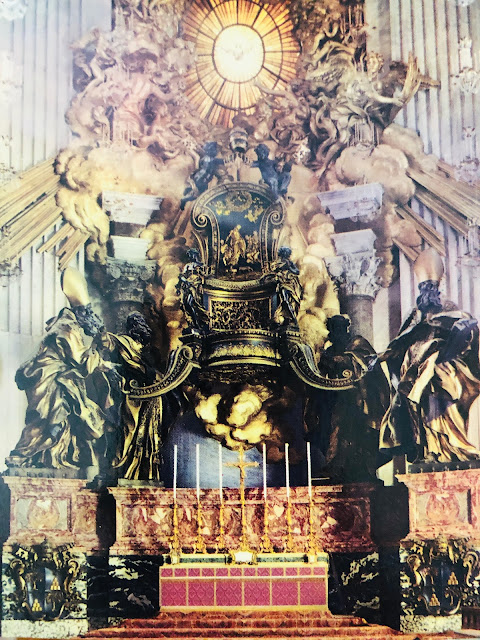
 The Vanquished Altar of the Chair of the Vatican Basilica ~ Liturgical Arts  Journal


Now, with the estrangement of SSPX, the strain on the Catholic Liturgy and on traditional clergy and faithful is at an all time high. In the long wake of Traditiones custodes we are more marginalized than ever, and Pope Leo XIV seems unconcerned. The Holy Father still caricatures us all as anti-Novus Ordo and anti-Vatican II, the millions of clergy and laity who are rightly critical of the New Mass and love the Old Mass and all things Traditional and are under the authority of the Pope and the Bishops under His authority. When will he take his head out of the sand and start to take the Mass of all the Ages seriously? Catholics should not have to apologize for loving, defending and promoting their long-standing Catholic culture.

The New Mass needs the Old Mass in order to understand itself and correct its course which often derails.

Friday, July 3, 2026

Cardinal Fernandez' Expanatory Note Lacks Penal Power

 La fórmula empleada por Tucho para excomulgar sacerdotes y laicos carece de eficacia penal 

The Formula Used by Tucho to Excommunicate Priests and Laity Lacks Penal Effectiveness

By INFOVATICANA | July 2, 2026 (Translation by ChatGPT)

The two documents published on July 2 by the Dicastery for the Doctrine of the Faith—a Decree and an Explanatory Note (Prot. No. 99/2009), both signed by Cardinal Víctor Manuel Fernández and the secretaries Armando Matteo and John J. Kennedy—contain defects in canonical drafting that drastically limit their actual scope. Analyzed in light of Book VI of the Code of Canon Law, their legal effect is reduced to the declaration of six excommunications. With respect to the more than seven hundred priests of the Priestly Fraternity of Saint Pius X and their faithful, the formula employed lacks penal effectiveness.

1. Two Instruments of Different Legal Nature

On the one hand, the Decree declares "for all legal purposes" that Bishop Alfonso de Galarreta and the four bishops consecrated on July 1—Pascal Schreiber, Michael Goldade, Michel Poinsinet de Sivry, and Marc Hanappier—have incurred ipso facto the latae sententiae excommunication reserved to the Apostolic See (canons 1387 and 1364 §1 CIC), and that Bishop Bernard Fellay, as co-consecrator who publicly adhered to the schismatic act, has incurred the excommunication of canon 1364 §1. It is a declaratory decree concerning censures already incurred: the only instrument, besides a judicial sentence, capable of declaring latae sententiae penalties (canons 1341, 1720). Its personal scope is specific and limited: six bishops.

The accompanying Explanatory Note, however, contains three additional assertions: that the sacred ministers of the Fraternity "are in schism and must be considered schismatics," thereby becoming "subject to the excommunication provided by law"; that lay faithful who "formally adhere" to the Fraternity "are to be considered schismatics and excommunicated" under the conditions established in the Pontifical Council for Legislative Texts' Note of August 24, 1996, which the Dicastery declares to remain in force and "adopts as its own"; and that confessions heard by its priests and marriages witnessed by them "are invalid."

An explanatory note is not among the types of acts that have penal effect. It is not a law (canons 7–22, 29 ff.), not a general executive decree (canons 31–33), not a penal precept (canon 1319), nor a judicial sentence or declaratory decree issued according to canons 1341 ff. and 1717 ff. It is an explanatory document. Whatever it states regarding undefined categories of persons has the value of doctrinal guidance, not the establishment or declaration of penalties.

2. The Contradiction Between the Decree and the Note

The Decree warns clerics and lay faithful "not to adhere to the schism of the Priestly Fraternity of Saint Pius X, because they would thereby incur ipso facto the penalty of latae sententiae excommunication." The verb is conditional: for them, the offense is presented as future and contingent.

The Note, by contrast, states in the present tense that the ministers "are in schism."

Both texts bear the same date and signatures. This contradiction must be resolved in favor of the Decree, the only instrument with penal form. Moreover, under canon 18, penal laws are subject to strict interpretation, which excludes expanding through an explanatory note what the Decree expresses merely as a warning. Consequently, the Dicastery itself, in its legally effective act, acknowledges that priests and faithful have not yet incurred the censure.

3. Absence of Individual Assessment of Imputability and the Regime of Undeclared Censures

Even assuming, for the sake of argument, that the Note intended to function as a general declaration, latae sententiae penalties are incurred ipso iure only by each individual who commits the offense with the full imputability required by canon 1321 §2, evaluated according to canons 1323–1325. Excusing or mitigating factors—such as inculpable ignorance of the law or penalty, error, grave fear, or necessity (even if merely believed to exist)—either exempt one from the penalty or prevent its application.

This determination must necessarily be made individually and has not been made for any priest. The collective designation of seven hundred clerics as "schismatics subject to excommunication," without an examination of imputability or any canonical procedure (canon 1720 requires hearing the accused and reaching moral certainty regarding both the offense and imputability), is incompatible with the regime established in Book VI.

Accordingly, any censures affecting the Fraternity's clergy remain, even under the Dicastery's own theory, at most latae sententiae penalties that have not been declared. Such censures are governed by canon 1331 §1, as mitigated by canon 1335 §2, under which the prohibition against administering the sacraments and sacramentals is suspended whenever a member of the faithful requests them for any just cause.

Thus, the formula chosen leaves legally unchanged the position of a faithful Catholic who seeks the sacraments from a priest of the Fraternity.

4. Reference to the 1996 Note Excludes Automatic Excommunication of the Laity

The 1996 Note of the Pontifical Council for Legislative Texts, which the Dicastery "adopts as its own" together with its conditions, is not an authentic interpretation under canon 16 §1. It lacks specific papal approval and was not promulgated as such; rather, it is an opinion published in Communicationes.

Its content is also restrictive. Section 5 requires two elements for "formal adherence to schism": an internal element (a genuinely schismatic intention—that is, placing one's personal choice above obedience to the Roman Pontiff); and
an external element (actions expressing that intention).

Section 7 further states that, regarding the faithful, "occasional participation in liturgical acts or activities of the movement is not sufficient" unless one also embraces its attitude of doctrinal and disciplinary separation. Above all, the individual's intention must be considered, and "the various situations must be judged case by case in the competent external and internal forums."

The reference therefore produces the opposite effect from what might appear at first glance. By incorporating the 1996 conditions, the 2026 Note itself excludes any automatic excommunication of laypersons merely for attending Fraternity chapels and makes any censure dependent upon an individual judgment that has neither been carried out nor could be carried out through a general document.

The practice of three pontificates supports this restrictive interpretation. The Congregation for Bishops' Decree of January 21, 2009 lifted the excommunications only of the four bishops consecrated in 1988, who alone had been formally declared excommunicated. In his March 10, 2009 Letter, Benedict XVI described the priests as suspended and lacking canonical status—not as excommunicated. The faculties later granted by Pope Francis likewise presuppose persons capable of receiving them, a status incompatible with excommunication (canon 1331 §1, no. 2).

5. Declaring Confessions and Marriages Invalid Would Require Revoking Papal Acts, Which the Note Does Not Do

The invalidity proclaimed by the Note does not arise from excommunication itself but from the lack of faculty to absolve (canon 966 §1) and from the absence of canonical form in marriage (canon 1108).

Both deficiencies had previously been remedied by acts of the Roman Pontiff: the apostolic letter Misericordia et misera, no. 12 (November 20, 2016), which permanently granted priests of the Fraternity the faculty to validly absolve sins; and
the March 27, 2017 Letter of the Pontifical Commission Ecclesia Dei, approved by Pope Francis, authorizing delegation for the valid assistance at marriages.

The Note mentions neither act and contains no clause revoking them.

Accordingly, canon 21 applies: revocation is not presumed in cases of doubt. Likewise, under the principle governing the hierarchy of legal acts, a dicastery cannot repeal acts of the Roman Pontiff without specific papal approval (art. 7 §2 of the General Regulations of the Roman Curia and consistent practice), and no such approval appears in the published text.

Unless the Pope expressly revokes these faculties, they remain in force, making the declaration of invalidity legally unfounded.

Even if they were revoked prospectively, in many cases jurisdiction would still be supplied under canon 144 because of common error or positive and probable doubt, a possibility the Note likewise fails to address.

6. Conclusion

The legal analysis yields the following conclusions.

First, the only excommunications validly declared are those of the six bishops through the Decree.

Second, regarding the clergy, the Explanatory Note lacks the formal capacity to declare penalties, contradicts the Decree's own conditional warning, and omits the individualized assessment of imputability required by canons 1321–1325 and 1720. If any censures exist, they would remain undeclared and their effects would be suspended whenever the faithful request the sacraments (canon 1335 §2).

Third, with respect to the laity, the incorporation of the 1996 Note—with its requirement of both internal and external elements and its insistence on case-by-case judgment—by definition excludes automatic excommunication.

Fourth, the declaration that confessions and marriages are invalid attempts to produce the legal effect of repealing existing papal acts, something a dicastery's explanatory note lacking specific papal approval cannot accomplish (canon 21).

One further indication of the technical imprecision of the documents may be noted: Bishop Fellay is censured only under canon 1364 §1, even though canon 1387 also applies to one who consecrates without a pontifical mandate, a condition equally satisfied by the co-consecrator.

In short, the legal formula chosen by the prefect—declaring six persons excommunicated by decree while addressing everyone else by explanatory note—leaves the excommunication of the Fraternity's priests and laity without legal effect. Where there is a penal instrument, there are only six recipients; where everyone else is mentioned, there is no penal instrument.

If the Holy See intended to extend the legal consequences of schism to the Fraternity as a whole, current law would have required a different approach: a law or penal precept, individual declaratory decrees following the procedure of canon 1720, and the express revocation—with specific papal approval—of the concessions granted in Misericordia et misera and in 2017.

For the moment, none of that has been done.

__

La fórmula empleada por Tucho para excomulgar sacerdotes y laicos carece de eficacia penal

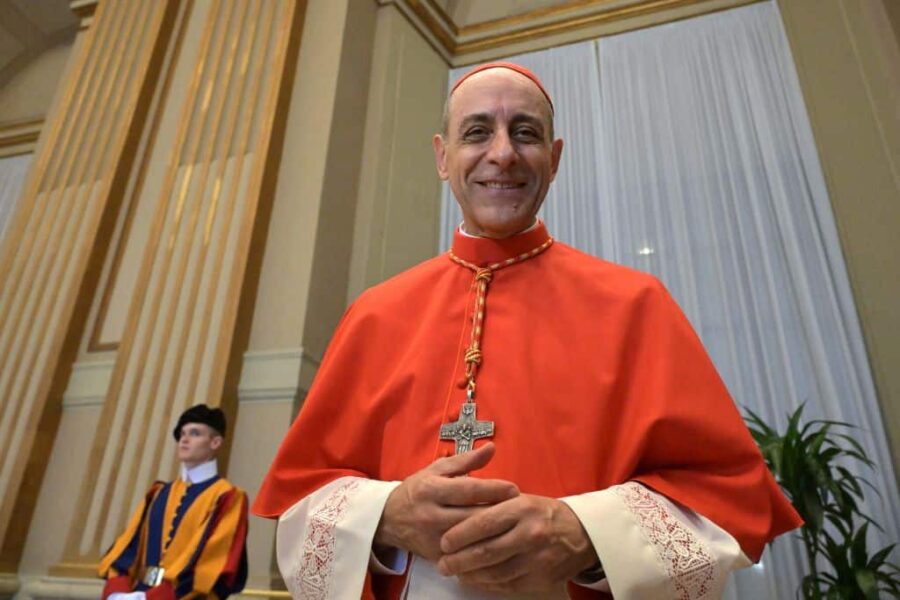
Newly elevated cardinal, Argentinian prelate Victor Manuel Fernandez, attends a courtesy visit of relatives following a consistory for the creation of 21 new cardinals in The Vatican on September 30, 2023. Pope Francis elevates 21 clergymen from all corners of the world to the rank of cardinal -- most of whom may one day cast ballots to elect his successor. (Photo by Tiziana FABI / AFP) (Photo by TIZIANA FABI/AFP via Getty Images)

por INFOVATICANA | 02 julio, 2026

Los dos documentos publicados el 2 de julio por el Dicasterio para la Doctrina de la Fe —un Decreto y una Nota Explicativa (Prot. N. 99/2009), ambos firmados por el cardenal Víctor Manuel Fernández y los secretarios Armando Matteo y John J. Kennedy— presentan defectos de técnica canónica que limitan drásticamente su alcance real. Analizados conforme al Libro VI del Código de Derecho Canónico, su efecto jurídico se reduce a la declaración de seis excomuniones. Respecto de los más de setecientos sacerdotes de la Fraternidad Sacerdotal San Pío X y de sus fieles, la fórmula empleada carece de eficacia penal.

1. Dos instrumentos de naturaleza jurídica distinta

Por un lado el Decreto declara «a todos los efectos jurídicos» que Mons. Alfonso de Galarreta y los cuatro consagrados el 1 de julio —Pascal Schreiber, Michael Goldade, Michel Poinsinet de Sivry y Marc Hanappier— han incurrido ipso facto en la excomunión latae sententiae reservada a la Sede Apostólica (cann. 1387 y 1364 § 1 CIC), y que Mons. Bernard Fellay, como co-consagrante que adhirió públicamente al acto cismático, ha incurrido en la excomunión del can. 1364 § 1. Es un decreto declaratorio de censuras ya contraídas: la única figura, junto a la sentencia, apta para declarar penas latae sententiae (cann. 1341, 1720). Su ámbito subjetivo es taxativo: seis obispos.

Pero la Nota Explicativa que lo acompaña contiene tres afirmaciones adicionales: que los ministros sagrados de la Fraternidad «están en el cisma y deben ser considerados cismáticos», quedando «sujetos a la excomunión prevista por el derecho»; que los laicos que «adhieran formalmente» a la Fraternidad «son de considerar cismáticos y excomulgados» en las condiciones de la Nota del Pontificio Consejo para los Textos Legislativos de 24 de agosto de 1996, que el Dicasterio declara vigente y «hace propia»; y que la penitencia administrada por sus sacerdotes y el matrimonio por ellos asistido «son inválidos». Una nota explicativa no figura en la tipología de actos con eficacia penal: no es ley (cann. 7-22, 29 ss.), no es decreto general ejecutorio (cann. 31-33), no es precepto penal (can. 1319), no es sentencia ni decreto declaratorio emanado conforme a los cann. 1341 ss. y 1717 ss. Es un acto de naturaleza expositiva. Cuanto declara sobre categorías indeterminadas de personas tiene valor de advertencia doctrinal, no de constitución ni de declaración de pena.

2. La contradicción entre el Decreto y la Nota

El Decreto amonesta a los clérigos y fieles laicos «a no adherirse al cisma de la Fraternidad Sacerdotal San Pío X, porque incurrirían ipso facto en la pena de excomunión latae sententiae». El tiempo verbal es condicional: el delito, respecto de ellos, se contempla como futuro y eventual. La Nota, en cambio, afirma en presente que los ministros «están en el cisma». Ambos textos llevan la misma fecha y las mismas firmas. El conflicto contradictorio debe resolverse a favor del Decreto, único instrumento con forma penal; y conforme al can. 18, las leyes penales están sujetas a interpretación estricta, lo que excluye extender por vía de nota lo que el decreto formula como mera admonición. La consecuencia es que el propio Dicasterio, en su acto jurídicamente eficaz, reconoce que sacerdotes y fieles no han incurrido aún en la censura.

3. Ausencia de imputabilidad individual apreciada y régimen de la censura no declarada

Aun aceptando, a efectos dialécticos, que la Nota pretendiera operar como declaración general, las penas latae sententiae se contraen ipso iure por cada sujeto que comete el delito con la imputabilidad plena que exige el can. 1321 § 2, apreciada conforme a los cann. 1323-1325: la ignorancia inculpable de la ley o de la pena, el error, el miedo grave y el estado de necesidad —incluso putativo— eximen de la pena o impiden su aplicación. Ese juicio es necesariamente individual y no ha sido realizado respecto de ningún sacerdote. La calificación colectiva de setecientos clérigos como «cismáticos sujetos a la excomunión» sin verificación de imputabilidad ni procedimiento (can. 1720: audiencia del reo, certeza sobre el delito y la imputabilidad) es incompatible con el régimen del Libro VI.

De ello se sigue que las eventuales censuras del clero de la Fraternidad permanecen, en el mejor de los casos para la tesis del Dicasterio, en la condición de latae sententiae no declaradas. El régimen de éstas es el del can. 1331 § 1, atenuado por el can. 1335 § 2: la prohibición de administrar sacramentos y sacramentales queda suspendida cuantas veces un fiel lo pide por cualquier causa justa. La fórmula elegida deja por tanto intacta, en el plano jurídico, la situación del fiel que solicita los sacramentos a un sacerdote de la Fraternidad.

4. La remisión a la Nota de 1996 excluye el automatismo respecto de los laicos

La Nota de 1996 del Pontificio Consejo para los Textos Legislativos, que el Dicasterio «hace propia» con sus condiciones, no es una interpretación auténtica ex can. 16 § 1 —carece de aprobación pontificia en forma específica y de promulgación como tal— sino un parecer publicado en Communicationes. Su contenido, además, es restrictivo. Su n. 5 exige para la «adhesión formal al cisma» un doble elemento: interno (voluntad propiamente cismática: anteponer la opción personal a la obediencia al Romano Pontífice) y externo (su traducción en actos). Su n. 7 establece que respecto de los fieles «no es suficiente una participación ocasional en actos litúrgicos o actividades del movimiento, realizada sin hacer propia la actitud de desunión doctrinal y disciplinar», que debe atenderse ante todo a la intención de la persona, y que «las diversas situaciones deben juzgarse caso por caso, en las sedes competentes de fuero externo y fuero interno».

La remisión produce así el efecto inverso al aparente: al incorporar las condiciones de 1996, la Nota de 2026 excluye ella misma toda excomunión automática de laicos por frecuentación de las capillas de la Fraternidad y subordina cualquier censura a un juicio individual que no se ha efectuado ni puede efectuarse mediante un documento general. La praxis de tres pontificados confirma esta lectura restrictiva: el Decreto de la Congregación para los Obispos de 21 de enero de 2009 remitió las excomuniones únicamente de los cuatro obispos consagrados en 1988, únicos censurados declarados; Benedicto XVI, en la Carta de 10 de marzo de 2009, situó a los sacerdotes en el plano de la suspensión y de la carencia de estatuto canónico, no de la excomunión; y las facultades concedidas por Francisco presuponen sujetos capaces de recibirlas, condición incompatible con la de excomulgado (can. 1331 § 1, 2º).

5. La invalidez de confesiones y matrimonios exige la revocación de actos pontificios que la Nota no efectúa

La invalidez que la Nota proclama no deriva de la excomunión, sino de la falta de facultad para absolver (can. 966 § 1) y de defecto de forma canónica en el matrimonio (can. 1108). Ambas carencias fueron suplidas por actos del Romano Pontífice: la Carta apostólica Misericordia et misera, n. 12 (20 de noviembre de 2016), que concedió con carácter estable la facultad de absolver válidamente a los sacerdotes de la Fraternidad, y la Carta de la Pontificia Comisión Ecclesia Dei de 27 de marzo de 2017, aprobada por Francisco, que habilitó la delegación para asistir válidamente matrimonios. La Nota no menciona ninguno de los dos actos ni contiene cláusula revocatoria. Rigen entonces el can. 21 —en la duda no se presume la revocación— y el principio de jerarquía de los actos: un dicasterio no puede derogar actos del Romano Pontífice si no es con aprobación pontificia en forma específica (art. 7 § 2 del Reglamento General de la Curia Romana; praxis constante), aprobación que no consta en el texto difundido. Mientras no medie revocación expresa del Papa, las facultades permanecen vigentes y la declaración de invalidez es jurídicamente infundada. Subsidiariamente, y aun revocadas pro futuro, operaría en múltiples supuestos la suplencia de la facultad por error común o duda positiva y probable del can. 144, que la Nota tampoco aborda.

6. Conclusión

El resultado del análisis es el siguiente. Primero: la única censura válidamente declarada es la de los seis obispos, mediante el Decreto. Segundo: respecto del clero, la Nota carece de idoneidad formal para declarar penas, contradice la admonición en condicional del propio Decreto, y omite el juicio individual de imputabilidad exigido por los cann. 1321-1325 y 1720; las censuras, de existir, serían no declaradas y quedarían suspendidas ante la petición de sacramentos por los fieles (can. 1335 § 2). Tercero: respecto de los laicos, la remisión a la Nota de 1996 —con su exigencia de doble elemento y juicio caso por caso— excluye por definición el automatismo. Cuarto: la declaración de invalidez de confesiones y matrimonios pretende un efecto derogatorio de actos pontificios vigentes que una nota dicasterial sin aprobación en forma específica no puede producir (can. 21). Cabe añadir un indicio de la imprecisión técnica del conjunto: Mons. Fellay es censurado únicamente ex can. 1364 § 1, cuando el can. 1387 alcanza a quien consagra sin mandato, condición que concurre también en el co-consagrante.

En suma, la fórmula jurídica elegida por el prefecto —declarar por decreto a seis y por nota a todos los demás— deja sin efecto, en derecho, la excomunión de los sacerdotes y laicos de la Fraternidad: donde había forma penal no hay más que seis destinatarios, y donde se nombra a los demás no hay forma penal. Si la Santa Sede pretendía extender las consecuencias del cisma al conjunto de la Fraternidad, el derecho vigente le exigía otra vía: ley o precepto penal, decretos declaratorios individuales previo procedimiento del can. 1720, y revocación expresa, con aprobación pontificia en forma específica, de las concesiones de Misericordia et misera y de 2017. Por el momento, nada de ello se ha hecho.

__ 

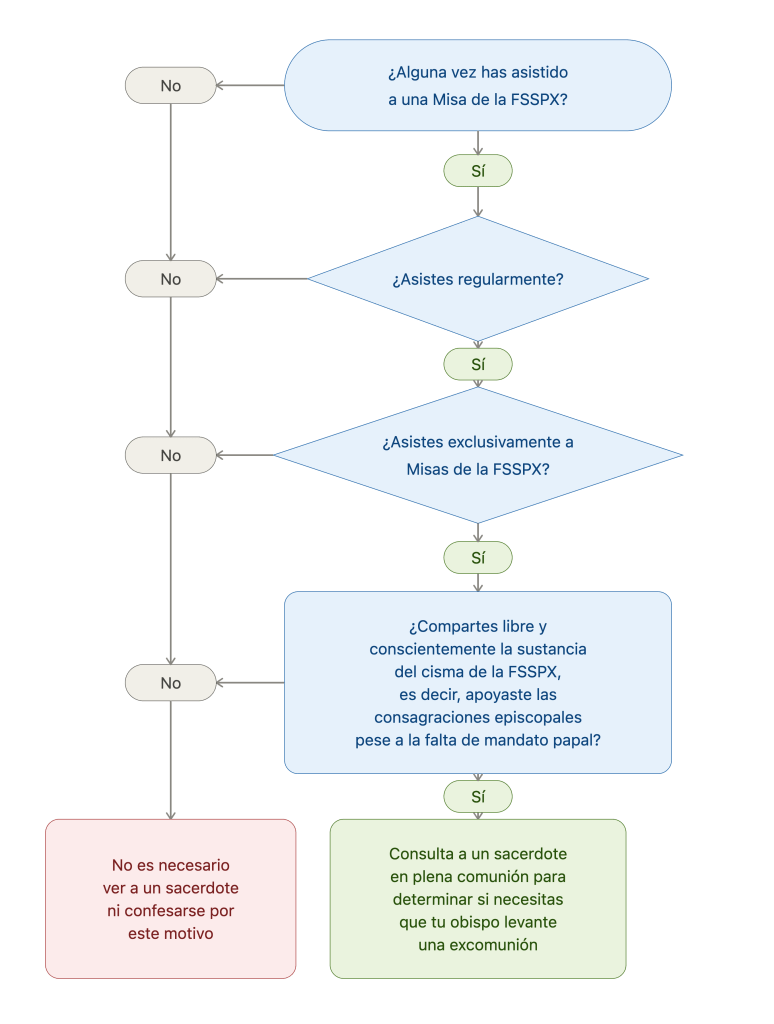
Tutorial para que los laicos sepan cómo proceder con el galimatias clasificador emitido por Tucho cardenal Fernández en este documento.
Wednesday, July 1, 2026

Related Posts Plugin for WordPress, Blogger...